5 Yoga Heart Openers for 360° Thoracic Mobility
Heart openers aren't just backbends! Explore 5 yoga heart-opening exercises for thoracic extension, flexion, lateral flexion, rotation, and scapular mobility.
This blog post was first sent to Jenni’s email list as an email newsletter. Sign up for the JRY email newsletter here!
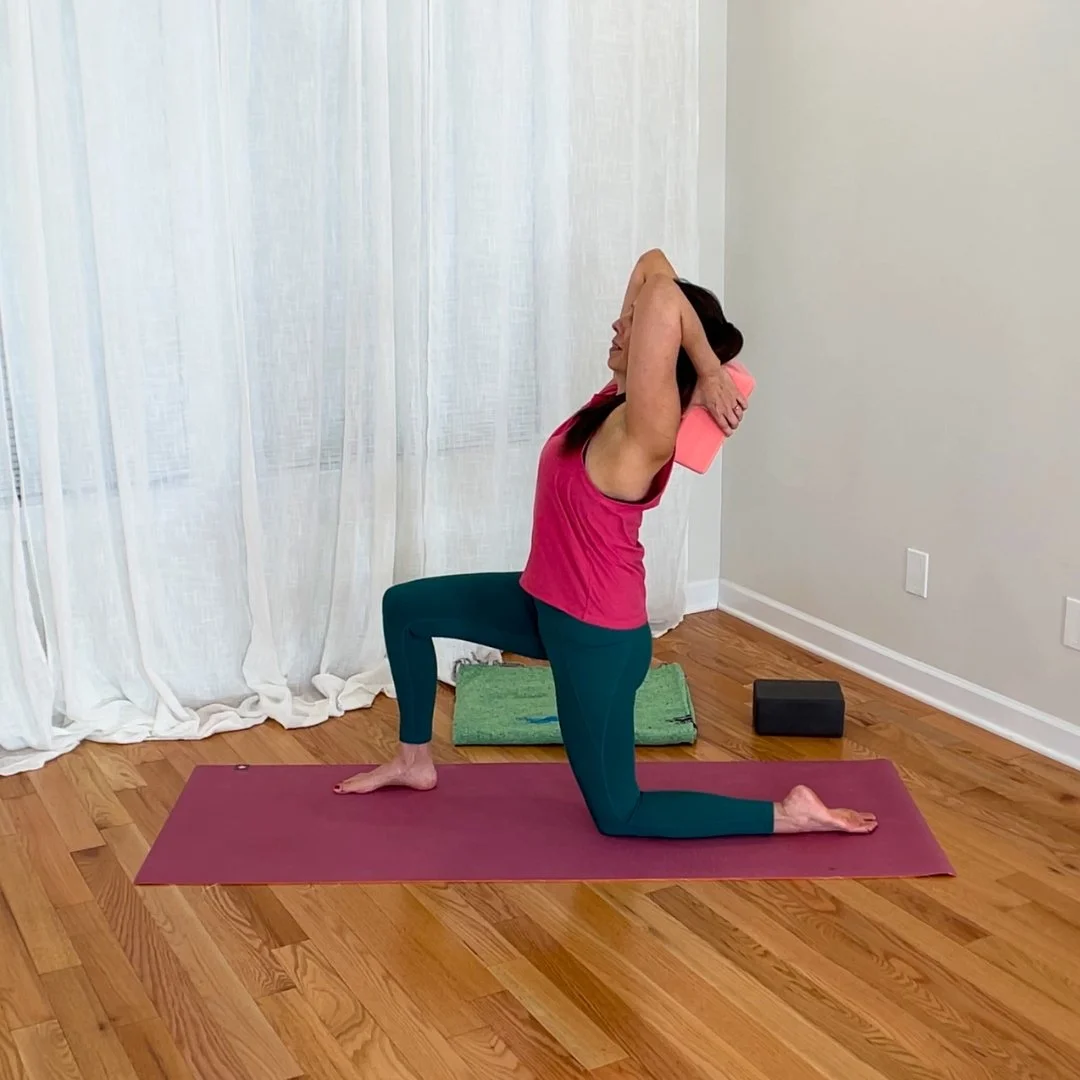
What Is a “Heart Opener” in Yoga?
When you hear the term “heart opener” in yoga, what type of pose comes to mind?
Probably a backbend, right? 🙃
And that’s not wrong! Backbends are heart openers. When we lift our chest and "arch" our spine, we’re creating movement through the front (anterior) side of our thoracic region.
But what if we thought about “heart opening” a little more broadly?
Instead of equating heart opening with backbending, what if we thought of it as mobilizing the thoracic region – which surrounds the heart in 360°?
In this case, any time we mobilize the thoracic spine – in any direction – we're technically "opening the heart".
And suddenly, we have a lot more possibilities!
Our thoracic spine can extend, but it can also flex (round), laterally flex (side bend), and rotate (twist). And our shoulder blades can move around our rib cage, too.
So today, I thought I’d share five decidedly non-backbendy ways we can “open the heart”! 😊
5 Yoga Heart Openers for 360° Thoracic Mobility
1) Sphinx cat/cow for thoracic flexion
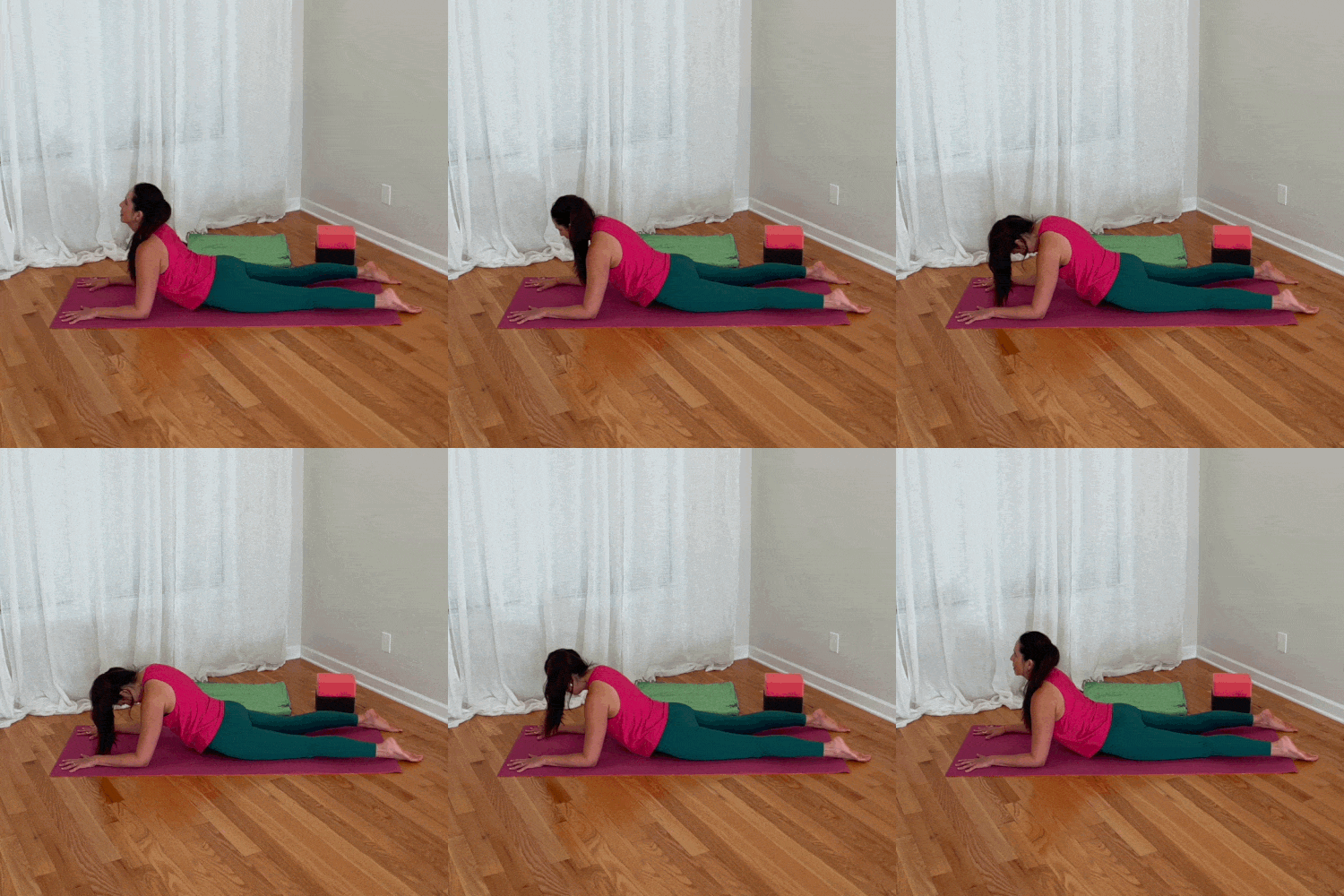
We usually think of sphinx pose as a backbend, but in this variation, we alternate between thoracic extension and thoracic flexion.
As you round the upper back toward the ceiling, you’re moving the thoracic spine in the oppositedirection from a traditional heart-opening backbend – i.e. spinal flexion.
In addition, I love sphinx as a base position to mobilize into flexion because the placement of the arms on the floor ensures that our shoulder blades will stay relatively still so that we can more effectively target true spinal motion.
2) Active lateral flexion with a resistance band
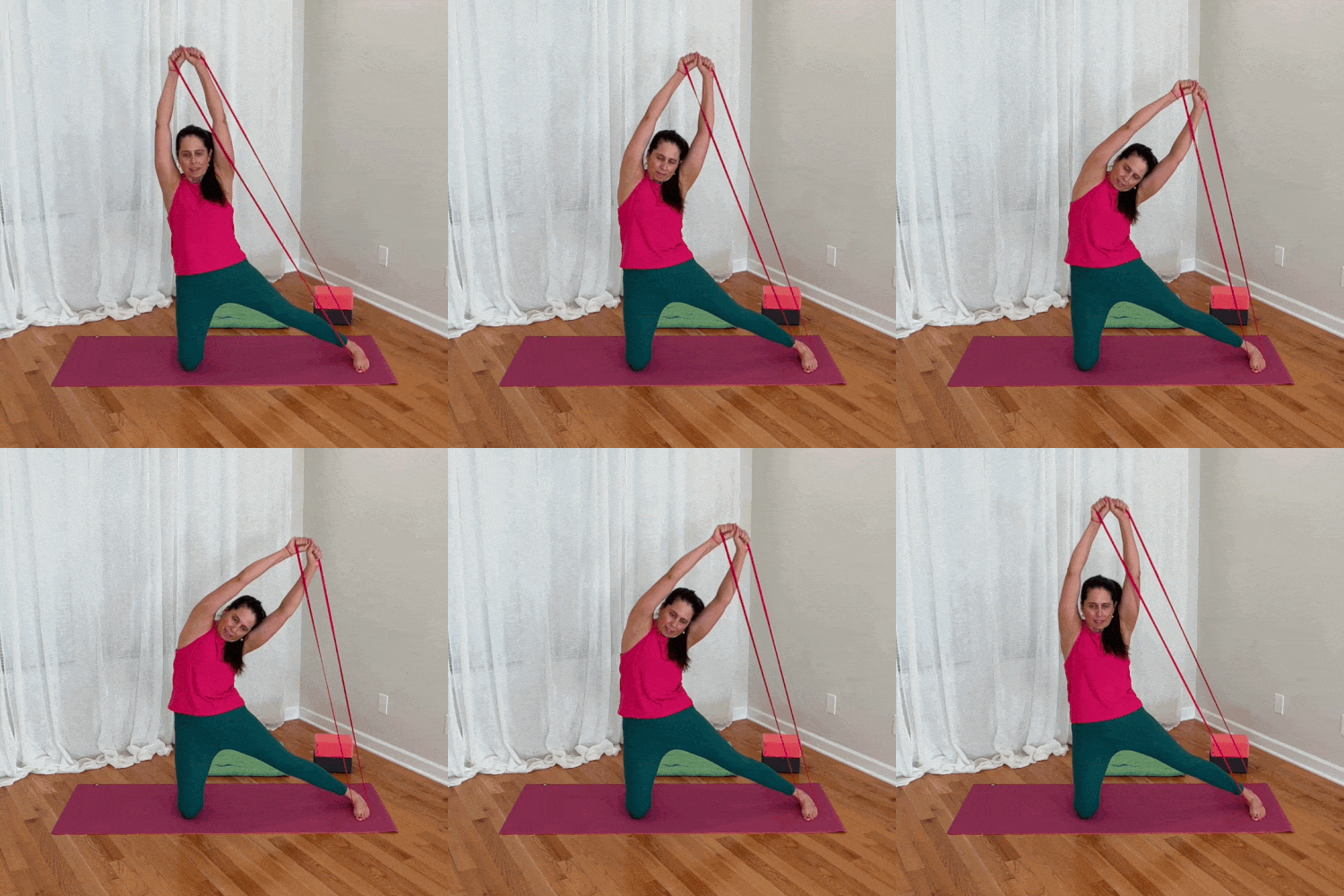
Side bending is one of the major movement possibilities for our thoracic spine – so why not include it in our heart-opening repertoire?
In this variation, I've anchored a resistance band under my foot and I hold the band overhead.
As I side bend toward the anchored band, my lateral flexors on the oppositeside work eccentrically to slow the movement down, and as I return to center, these same muscles work concentrically – actively mobilizing (and strengthening!) through lateral flexion.
3) Windmill at the wall for thoracic rotation
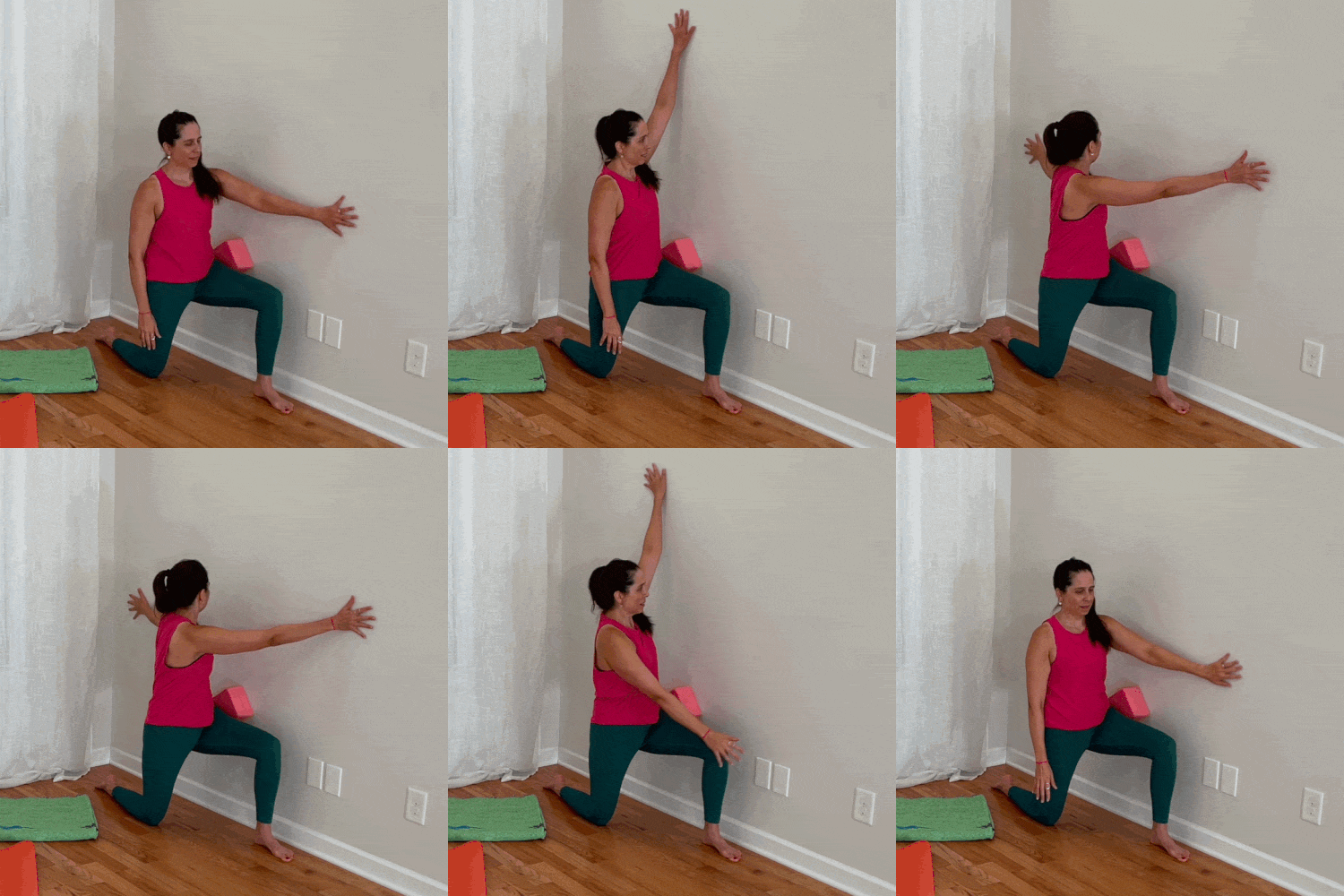
Rotation is another movement possibility for the thoracic spine that can be easily overlooked when we equate "heart openers" with backbends alone.
In this low lunge windmill at the wall, I've placed a yoga block between my hip and the wall.
The wall and yoga block help keep the pelvis relatively still while you rotate through the upper body – offering you a lovely and potent opportunity to explore thoracic rotation.
4) Thoracic extension with a yoga block
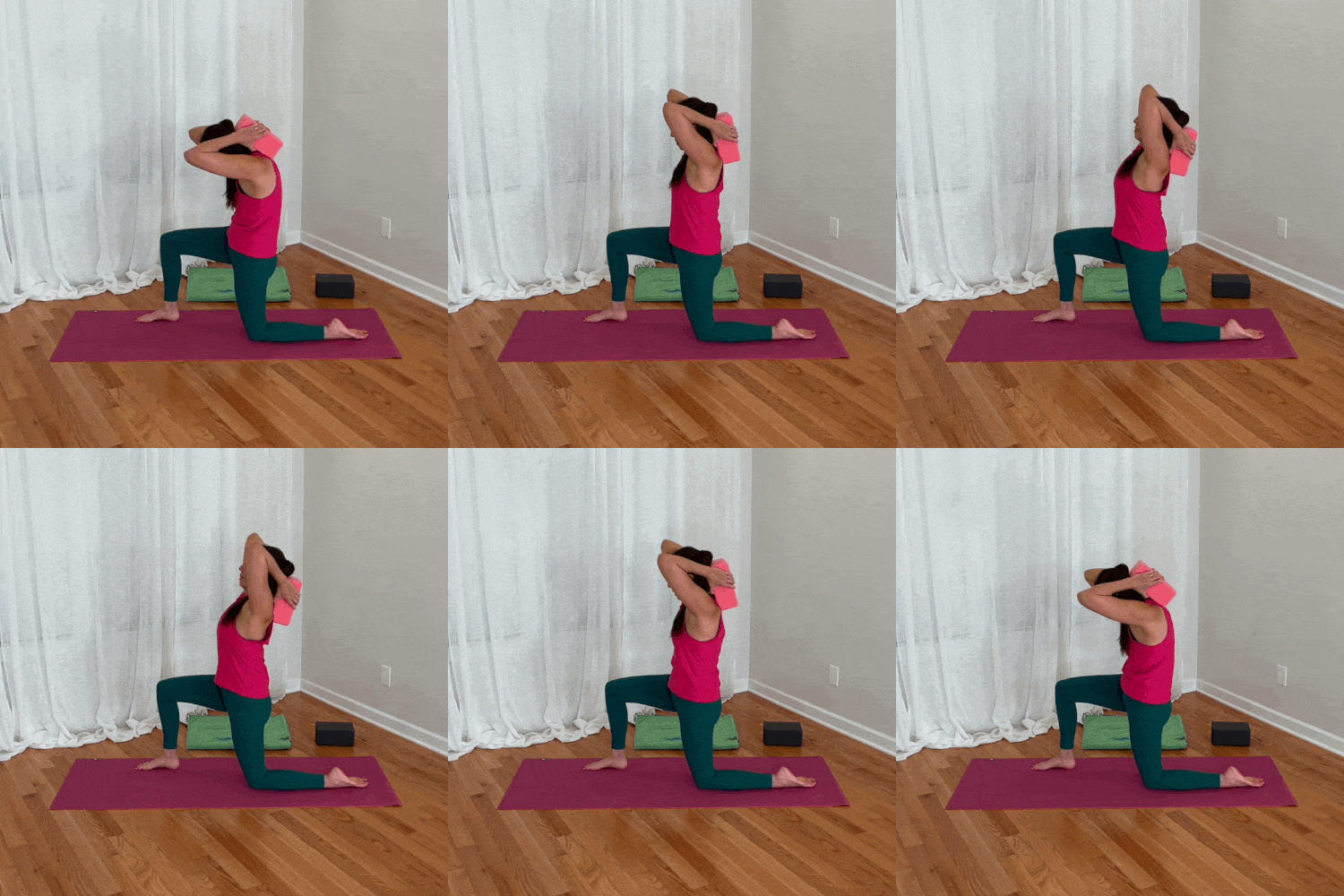
Backbending is the heart-opening movement we’re probably most familiar with – and it absolutely deserves a place in our 360° approach!
In this variation, place a yoga block behind your upper back and drape your thoracic spine over it. The block acts as a fulcrum for thoracic extension, allowing you to explore backbending specifically through the upper and mid-back.
Try placing the block at slightly different levels of your thoracic spine to explore extension in different areas – and notice how the experience changes!
5) Shoulder blade push-ups
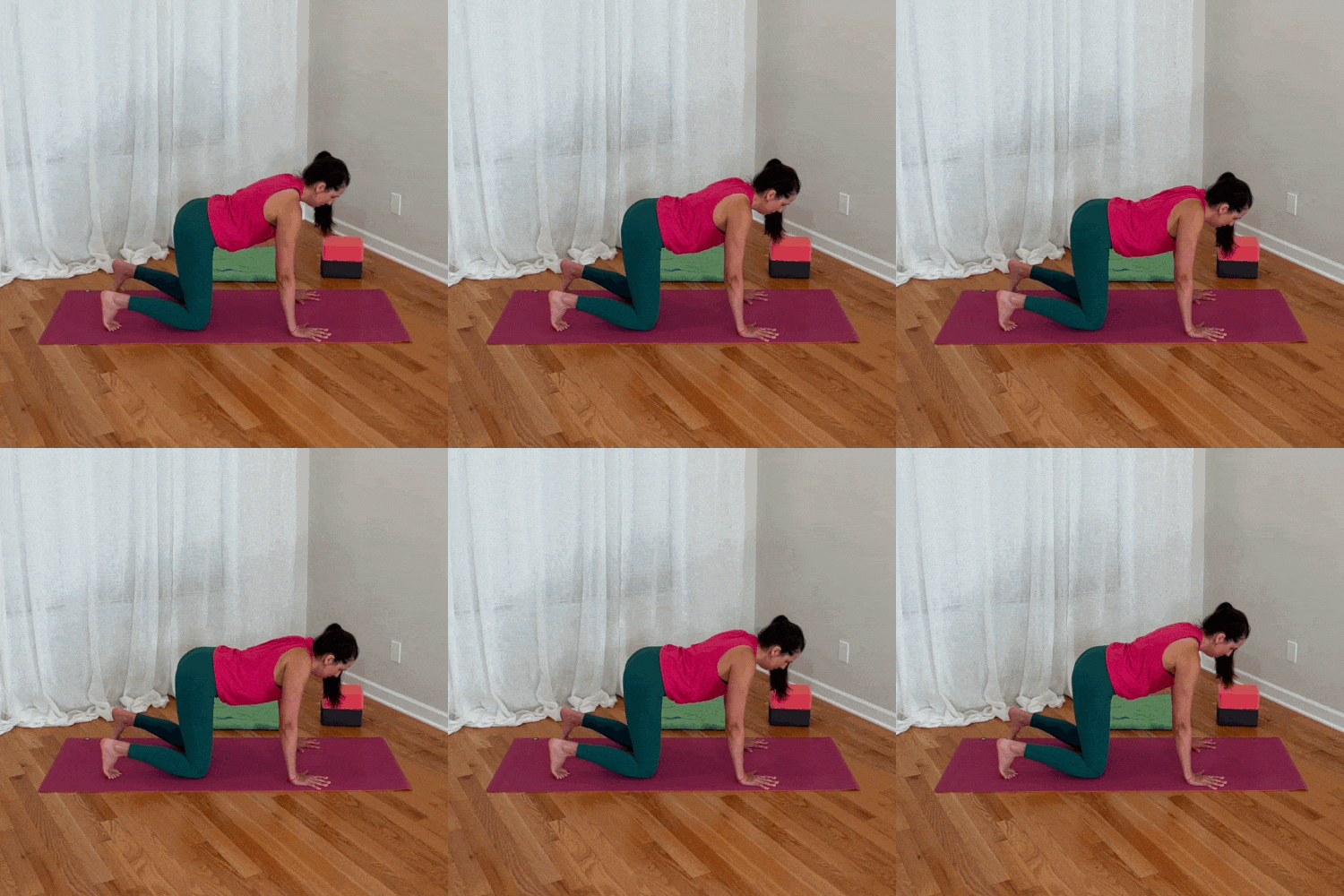
Our thoracic spine isn’t the only structure that can move in our “heart-opening” region – our shoulder blades can glide around our rib cage, too!
In these shoulder blade push-ups, keep your elbows straight as you alternate between scapular retraction (allowing your shoulder blades to move toward each other) and scapular protraction (pressing the floor away as your shoulder blades move apart).
Try to keep your spine relatively still as you move. This helps you explore movement of the shoulder blades independently from movement of the spine – something we don’t always distinguish in traditional yoga movements like cat/cow.
If you’d like more detailed instruction on these five movements – with visuals and teaching tips – check out my video on this topic: Heart Openers Aren’t Just Backbends! 360° Thoracic Mobility for Yoga – embedded right here for you. ⬇️
I hope this gives you some fresh ideas for expanding what a “heart opener” can be in your yoga practice or teaching!
Watch: 5 Heart Openers for Thoracic Mobility
FAQ: Yoga Heart Openers & Thoracic Mobility
What is a heart opener in yoga?
“Heart opener” is a yoga term commonly used for poses that open or expand the front of the chest, especially backbends. But we can also think more broadly about heart opening as mobilizing the thoracic region in multiple directions, rather than limiting the category to spinal extension.
Are all heart-opening yoga poses backbends?
No! Backbends are certainly heart openers, but they’re only one possibility. The thoracic spine can extend, flex, laterally flex, and rotate, and exploring all of these movements can give us a more well-rounded approach to thoracic mobility.
What is thoracic mobility?
Thoracic mobility refers to movement through the thoracic spine, the region of the spine associated with the rib cage. The thoracic spine can move into flexion, extension, lateral flexion, and rotation.
Can spinal flexion be considered a heart opener?
If we define “heart opening” more broadly than simply stretching or opening the front of the chest, yes! Thoracic flexion creates movement and expansion through the posterior side of the thoracic region. It’s essentially the opposite direction from a backbend, but it can still be part of a 360° approach to mobilizing this area.
What do the shoulder blades have to do with heart openers?
The shoulder blades, or scapulae, move along the rib cage through actions including protraction and retraction. Because scapular movement contributes to the movement possibilities of the broader thoracic region, exploring shoulder blade movement can be another useful way to expand our concept of “heart opening.”
You Might Also Like…