
What's the Best Way to Improve Flexibility During a Warm-Up? (According to Research)
Is It Stretching, Foam Rolling, or Something Else? New Research Suggests We May Be Asking the Wrong Question
This blog post was first sent to Jenni’s email list as an email newsletter. Sign up for the JRY email newsletter here!
What's the best way to increase range of motion during a warm-up?
Should we stretch? Foam roll? Ride a bike? Do dynamic mobility drills? Or is there another method that's even better?
A recent systematic review and meta-analysis tackled this exact question, and its findings highlight one of my favorite themes in movement science:
We often don't need to be nearly as specific in our approach to the body as we think we do.

The Evolution of Warm-Up Advice
For years, stretching was considered the go-to approach for improving acute flexibility before activity.
But then research came along (now quite outdated) suggesting that prolonged static stretching before exercise was bad because it reduced muscle strength and power.
This sparked a trend of swapping stretching for foam rolling in warm-ups, with the idea that foam rolling was a better way to improve flexibility without the drawbacks.
(Side note: The *current* research says static stretching is totally fine as part of a well-rounded warm-up that includes dynamic movement. In fact, it might even have benefits! 😱)
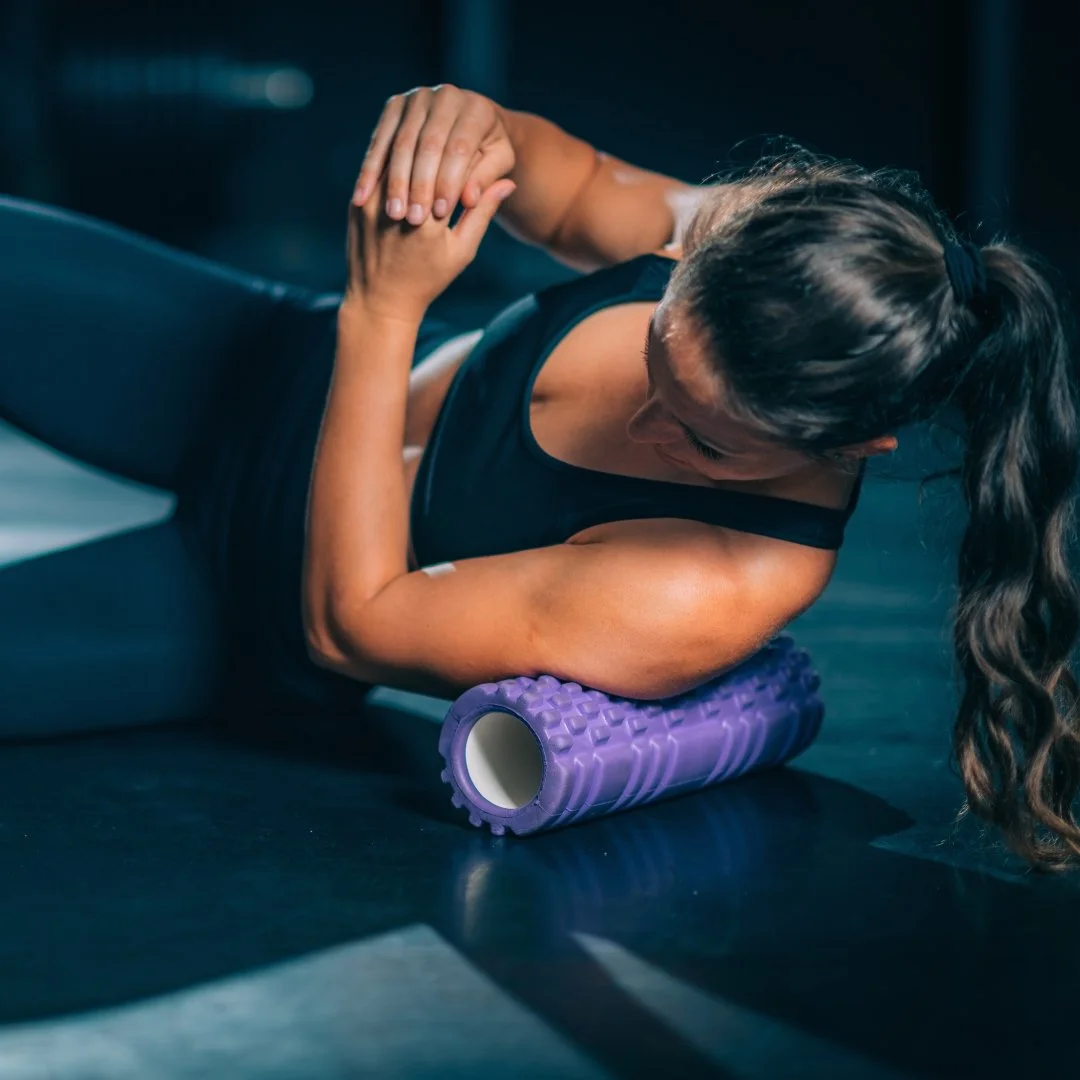
Today, the evidence paints a much more nuanced picture. We now know that static stretching is absolutely compatible with a well-rounded warm-up that also includes dynamic movement. In fact, for many people and many activities, stretching during a warm-up may even provide benefits.
But this raised another interesting question.
If both stretching and foam rolling can increase range of motion before activity... Are they special and unique in this regard?
Or could other activities increase range of motion during a warm up just as effectively? Could stretching and foam rolling be simply two of many different ways to accomplish the same goal of increasing range of motion during a warm-up?
This is what this research investigated!
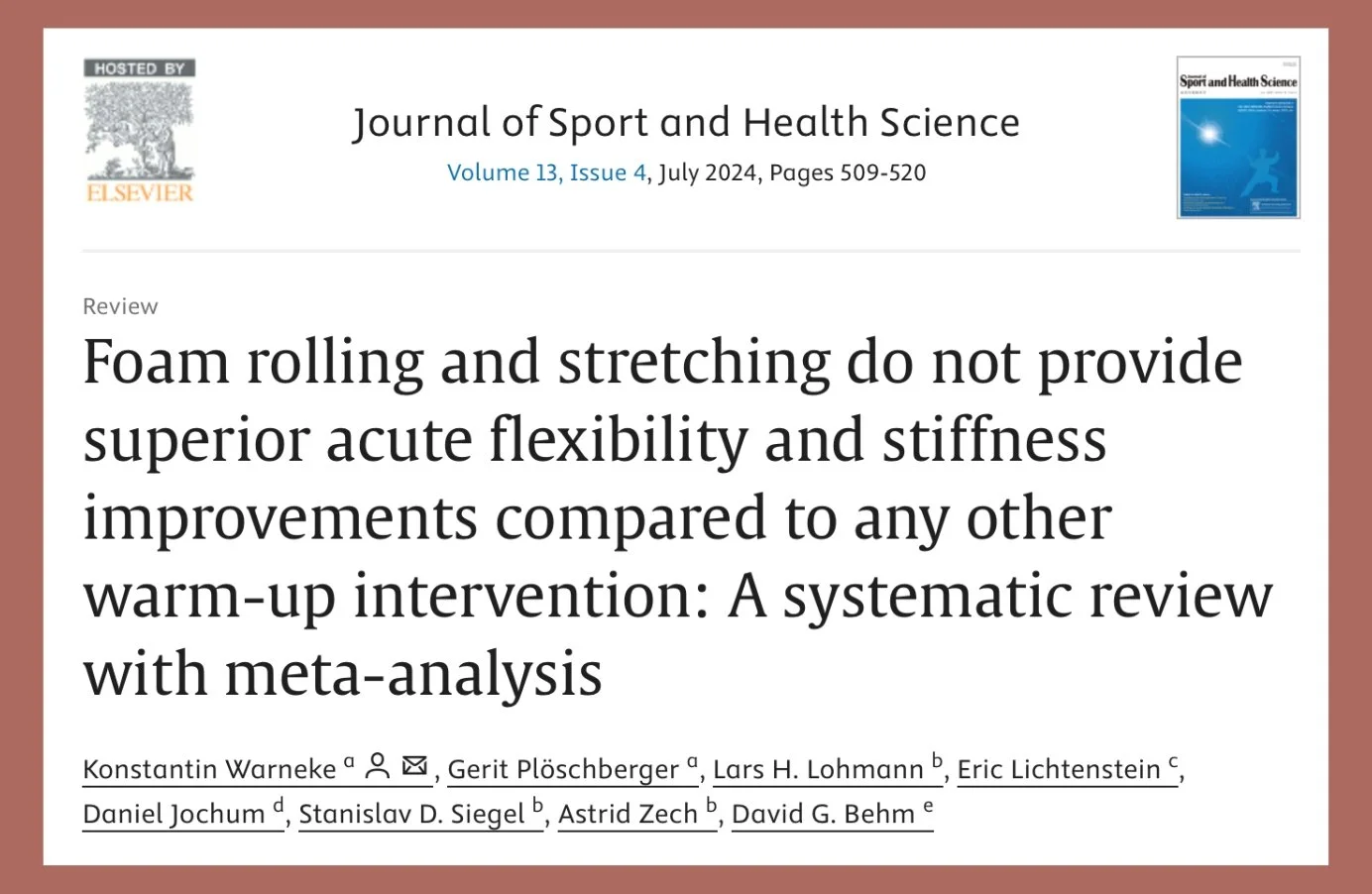
Here’s the Research on Warm-Ups We’re Looking at Today:
What Did the Researchers Do?
To answer this question, researchers performed a systematic review and meta-analysis, combining results from dozens of previous studies.
Rather than comparing stretching to doing nothing, they compared stretching and foam rolling with a wide variety of other warm-up interventions, including:
• walking
• cycling
• calisthenics
• strength training
• vibration
• electrical stimulation
• passive heat application
• and several other approaches.
Their question was simply: If our goal is to improve range of motion before exercise, is stretching or foam rolling actually better than these other warm-up methods?

What Did the Study Find?
The answer? No, stretching and foam rolling are not better than any of the other warm-up activities included in the study.
Across the studies, stretching, foam rolling, cycling, walking, strength training, calisthenics, passive heating, and several other interventions all produced similar immediate improvements in range of motion.
In other words, there wasn't one clearly superior warm-up method for increasing flexibility.
That's a pretty remarkable finding!
The Researchers Started with a Surprisingly Simple Scientific Idea
One thing I especially appreciated about this paper was that the authors explicitly grounded their hypothesis in a scientific principle called Occam's razor.
Occam's razor is the idea that when multiple explanations are possible, the simplest explanation is often the best place to start.
Of course, "simplest" doesn't necessarily mean "correct." It just means we shouldn't assume a complicated explanation if a simpler one adequately explains what we're observing.
The authors of this paper wondered whether stretching and foam rolling might not actually be special after all.
Instead, perhaps many different warm-up activities produce similar improvements in range of motion because they all have one simple thing in common...

Why Would So Many Different Warm-Up Activities Produce Similar Range of Motion Results?
The authors propose a surprisingly simple explanation.
Although these interventions look very different on the surface, the researchers point out that they may all share one important feature:
They all increase tissue temperature.
Every active warm-up involves muscle contractions. Muscle contractions require energy, and the chemical reactions that release this energy also generate heat.
As muscles and other tissues warm up, a number of physiological changes occur. Previous research has shown that increased tissue temperature can improve muscle contractile properties and the viscoelastic behavior of muscles and connective tissues. Other research has also reported increases in intramuscular fluid and improvements in joint lubrication through greater synovial fluid movement.
Interestingly, active movement may not even be required. Other studies have found that passive heating, such as sitting in a hot water bath, can also improve physical performance and increase tissue temperature.
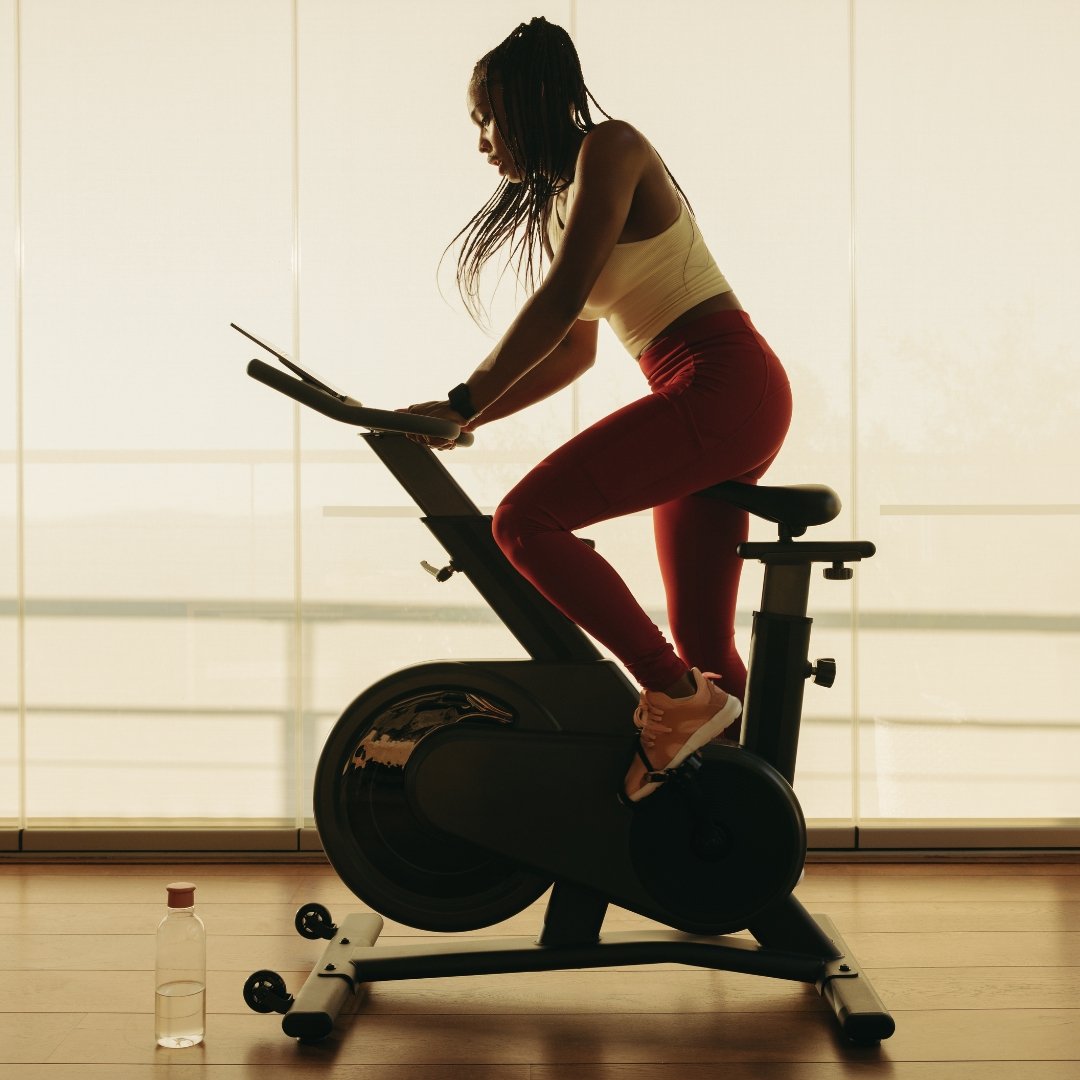
The authors also point out that both stretching and foam rolling have been shown in previous research to increase muscle temperature, suggesting that these interventions may not be working through completely unique mechanisms after all.
And as muscles and other tissues become warmer, range of motion naturally tends to increase.
Stretching warms the tissues.
Foam rolling warms the tissues.
Cycling warms the tissues.
Walking warms the tissues.
Calisthenics warm the tissues.
Passive heating increases tissue temperature.
The researchers suggest that this common effect may explain why so many seemingly different warm-up strategies produce similar improvements in flexibility.
Of course, this remains a proposed mechanism rather than something the study directly tested. But it's an informed explanation that does fit the available evidence.
The Bigger Lesson
This is actually the part of the paper that resonated with me most.
One of the themes you'll probably notice across my courses and educational content is that movement science often makes movement less complicated, not more.
We sometimes assume there's one perfect warm-up. One perfect recovery routine. One perfect mobility drill. One perfect stretch.
But time and time again, research reminds us that the human body is remarkably adaptable.
There are often many different ways to accomplish the same goal. And sometimes, the simplest explanation turns out to be the most useful one. And that's exactly what this review suggests.
If your goal is simply to improve range of motion before an exercise activity, you probably don't need to obsess over whether stretching, foam rolling, cycling, or another warm-up strategy is "best."
Instead, the evidence suggests that you have many options!
What This Means for Your Practice
If you enjoy stretching before practice, that’s excellent!
If you'd rather foam roll, that's just fine too.
The practical takeaway from this research is not that you should stop stretching or throw away your foam roller. Rather, this review suggests there's no need to emphasize these two activities as the only ways to improve range of motion during a warm-up.
If you'd rather begin with a few minutes of walking, cycling, strength exercises, or dynamic movement, those seem to work just as well for increasing your range of motion. This means we have many options when it comes to what our warm-up looks like!
Personally, I find that idea very freeing.
Rather than searching for the one perfect warm-up, we can choose the approach that fits our goals, our preferences, and the activity we're about to do.
Because sometimes, the most evidence-based answer isn't that one specific method is superior. Sometimes it's that many different approaches work.
And to me, that's one of the most empowering messages that movement science has to offer!
Reference
Warneke K, et al. Foam rolling and stretching do not provide superior acute flexibility and stiffness improvements compared to any other warm-up intervention: A systematic review with meta-analysis. Journal of Sport and Health Science. 2024.
You Might Also Like…