7 Creative Yoga Block Drills for Proprioception & Body Awareness
This article was originally shared in my email newsletter, where I send free, research-informed insights about yoga anatomy, biomechanics, and movement science every 1–2 weeks. Sign up here!
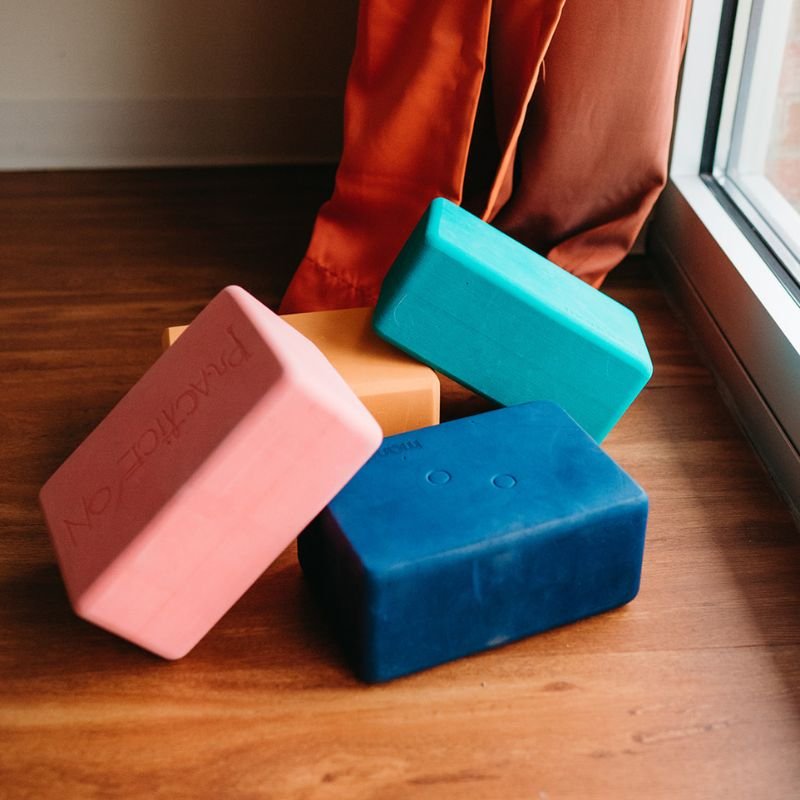
When most people think of yoga blocks, they think of a prop we use to make poses easier.
And if you've practiced with me before, you might know that I often use yoga blocks for something completely different: making exercises harder (said with an evil laugh 😈)!
But today, I'd like to focus on another side of this prop altogether: using a yoga block to enhance proprioception, feedback, and novel sensory input!
There are so many ways we can use a block to help us better sense where our body is in space in our yoga poses. (See how that's a different focus from using a block solely to make things easier/harder?)
This approach to the yoga block can give our nervous system more information to work with – and that can make familiar movements feel surprisingly different (and more effective!).
Here are three examples of yoga block variations with a focus on proprioception and body awareness – and in the video I’ve embedded below, I share a total of seven of these moves!
3 Yoga Block Drills You Can Try Right Away
1) Fire Hydrants + a Block "Wall":
Fire hydrants are great for strengthening the lateral hips (hip abductors), but many of us unconsciously shift our body to the side as we lift the leg – creating a shortcut that makes the movement easier. Here’s an example of what this looks like:
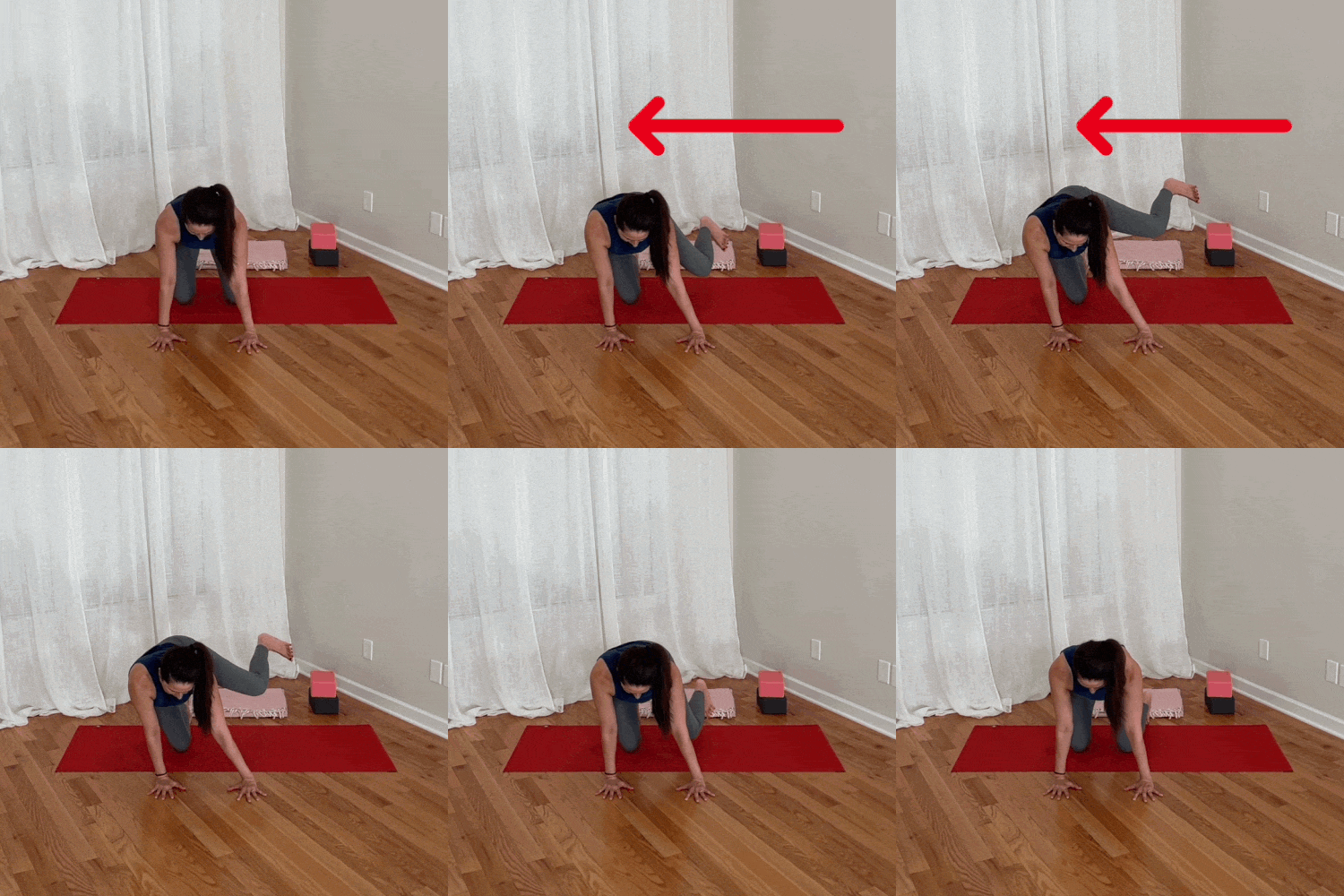
But today’s our lucky day, because we can use the excellent tool of a yoga block (or two!) to eliminate that lateral shift and make our fire hydrants more effective.
For this variation, you place a stack of two blocks beside your hip like a little wall:
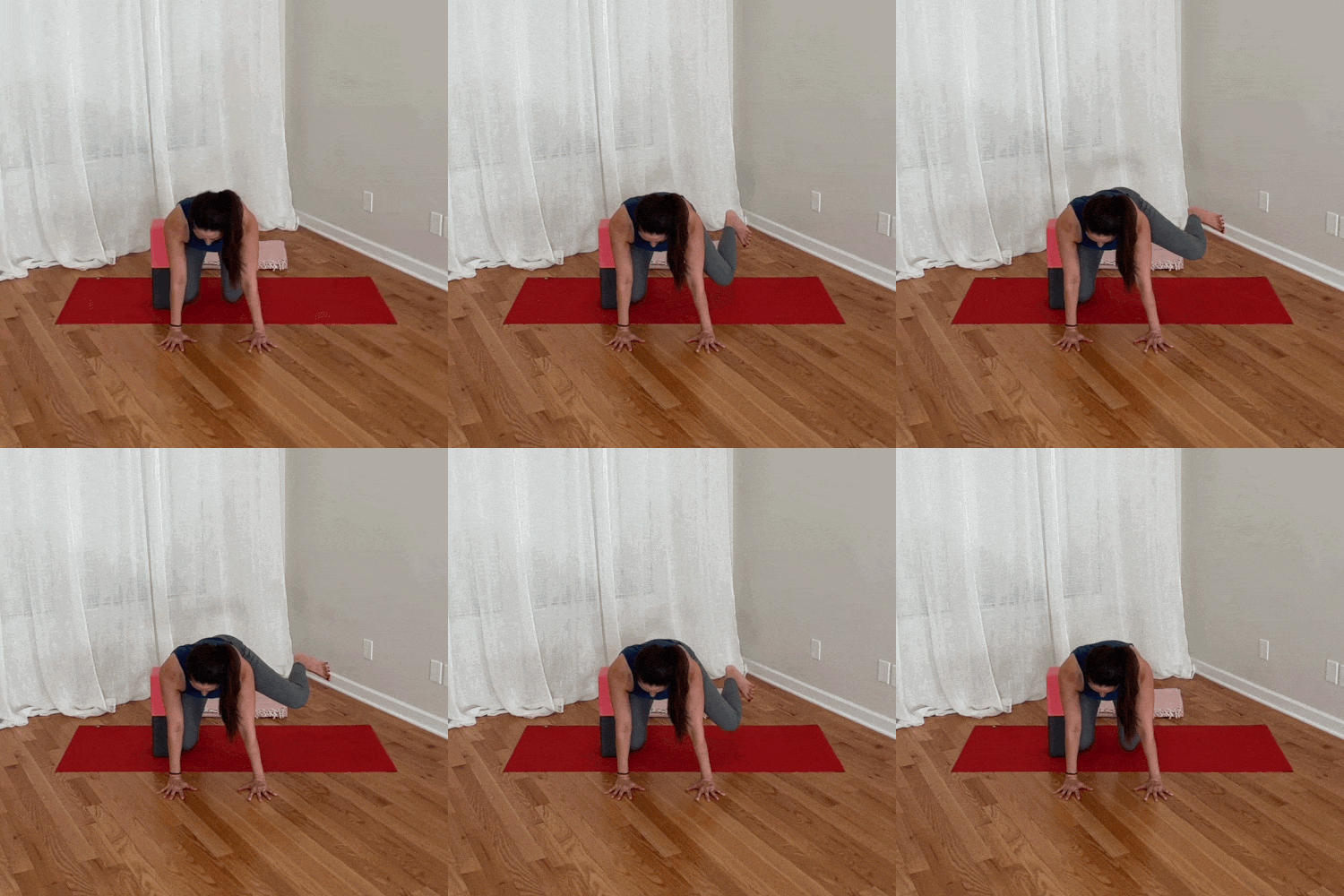
The blocks provide immediate feedback. If you start leaning into them, you'll know right away because you'll topple them over! Placing the blocks beside the hip creates a simple external reference point that influences how we move.
This can help you better sense your position in space and make your fire hydrants more effective. 🔥
I often find that external sources of feedback like this can make movement feel more intuitive. Instead of trying to monitor ourselves internally, we can simply respond to information from the environment around us.
2) Plank and Chaturanga with a Yoga Block on the Low Back
This is one of my favorite examples of how a yoga block can provide tactile feedback!
In plank and chaturanga, it's common for us to unknowingly arch our spine (move into some lumbar extension), which reduces the work in our anterior core.
This “misalignment” (if I have to use that term hehe) looks something like this:
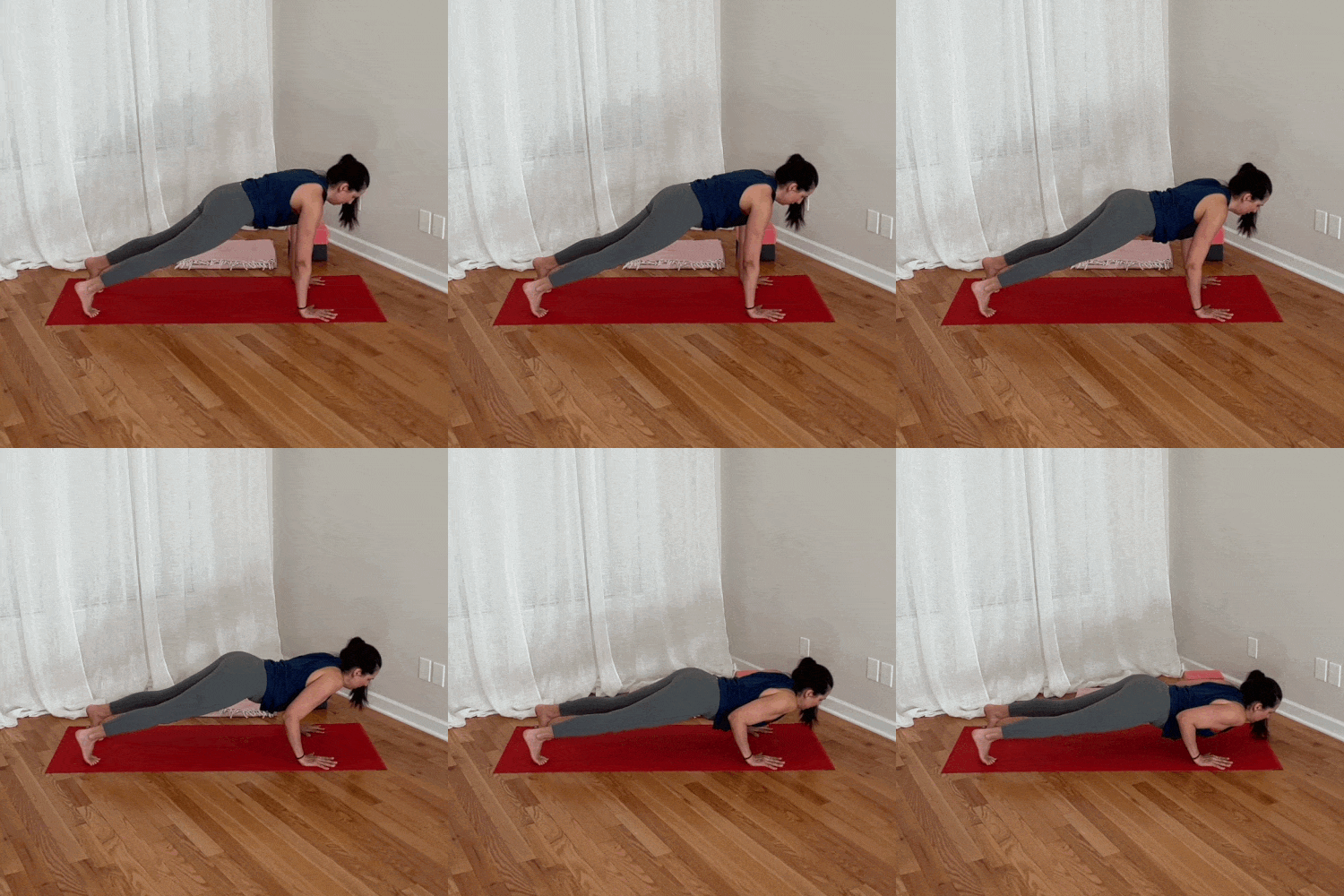
But here's a great block trick for that!
Place a yoga block on your low back, between your rib cage and pelvis, like this:
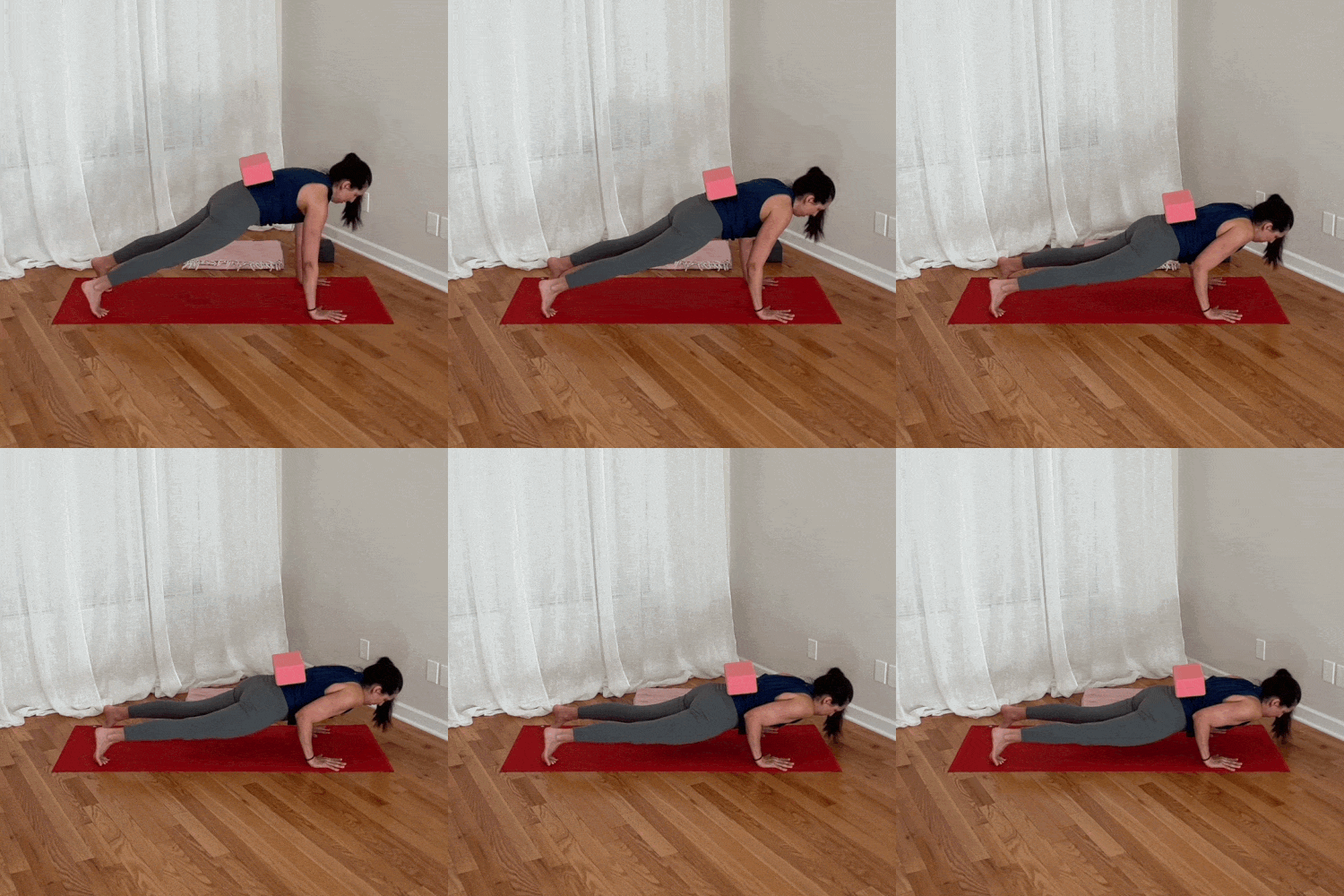
As you hold plank or lower into chaturanga, think about pressing your low back up into the block. This action instantly engages your anterior core, lighting up your plank and chaturanga from your center.
If you instead start to arch your spine, moving into lumbar extension, you’ll sense that alignment change because your spine will move away from the yoga bock. This tactile feedback lets you know right away if you’re shifting the work away from your core. If you feel yourself arch away from the block, simply push back up into the block to re-engage your abdominals. It’s a simple fix!
With the block in this spot, we’re given a point of contact that we can feel throughout the movement. Rather than wondering what our pelvis and spine are doing, we now have information coming from the block itself! We use the tactile feedback of this prop to help us sense our trunk more clearly and direct the work where we want it – our anterior core.
(BTW, if you’re looking to build strength for chaturanga, I feature my favorite tips in this blog post!)
3) Supta Padangusthasana with a Yoga Block on the Foot
For this variation, balance a yoga block on the foot of your lifted leg.
Then slowly lower the opposite leg toward the floor and lift it back up.
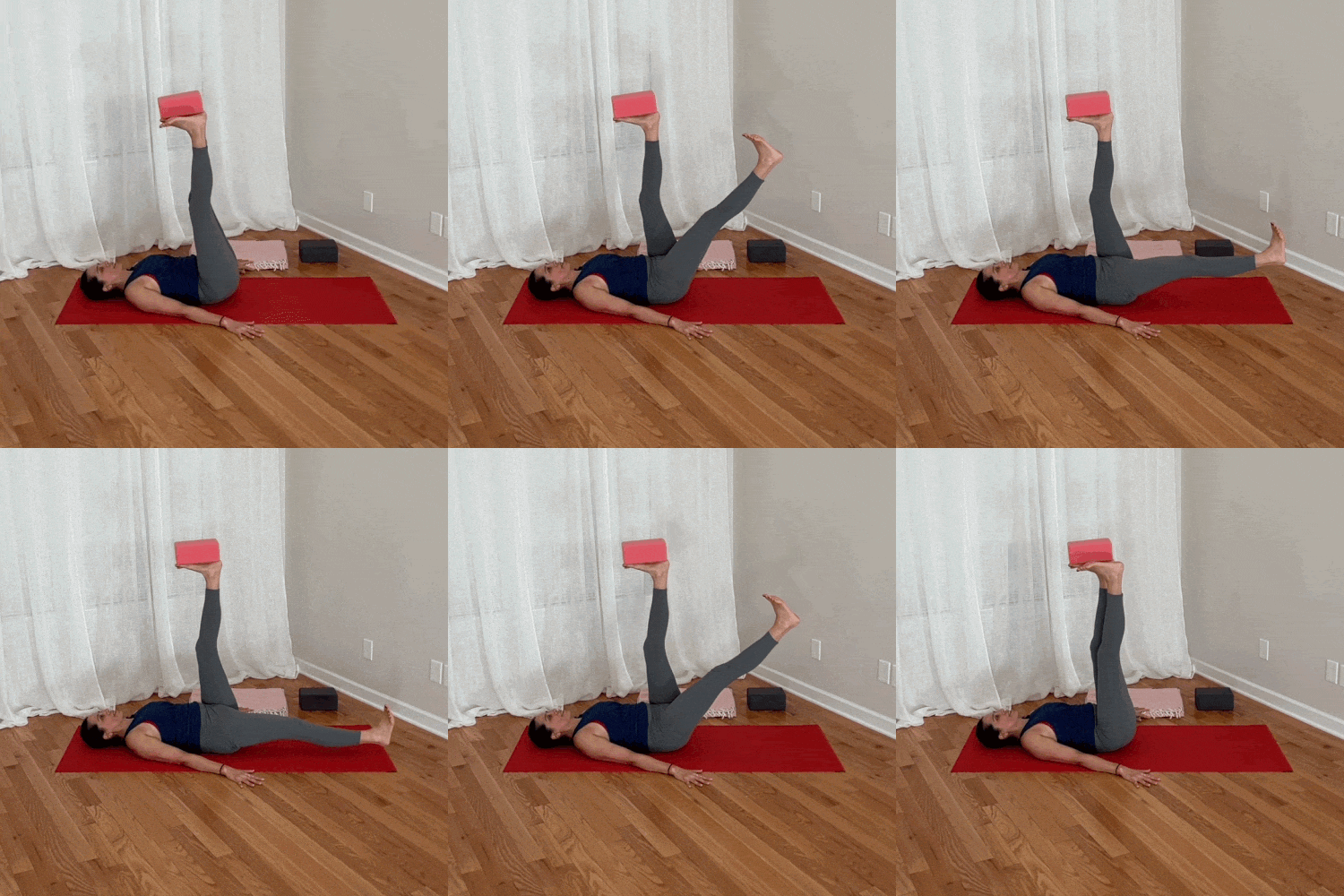
Not only does the block instantly create a stability challenge, but its presence also provides sensory input that helps us keep that lifted leg truly still as we lower our other leg through space. (And as we lower the opposite leg, we bring on a stretch to the lifted leg's hamstrings!)
What I find interesting about this variation is that the block doesn't dramatically change the pose itself.
Instead, it changes the demands of the pose. The nervous system now has an additional task: keep the block balanced while the opposite leg moves.
The presence of the block also provides extra sensory information. Many people notice that they're more aware of the position of the lifted leg because they have a concrete object resting on it.
Meanwhile, lowering and lifting the opposite leg introduces movement elsewhere in the body, making it more difficult to keep the lifted leg perfectly still.
The result is a familiar hamstring stretch that suddenly requires a bit more attention, coordination, and body awareness.
These are just three of the seven novel block moves for proprioception that I cover in my full video tutorial.
In this video, I also share:
• a creative hip stability challenge
• an asymmetrical chair pose and warrior 3 sequence
• a low lunge thoracic rotation mobilizer using a wall and a block
• a surprisingly wonderful suboccipital massage technique
…and a few other block-based movement explorations.
If you're curious about creative ways to use props beyond the good old easy/hard dichotomy, I think you'll enjoy this one – watch here! ⬇️
Watch the Full Video: 7 Creative Yoga Block Drills
Same Pose, Different Experience
One of the themes that runs through all seven drills in this video is that a prop can completely change our experience of a movement without necessarily changing the pose itself.
A yoga block can provide feedback.
It can create a stability challenge.
It can introduce a new source of sensory input.
It can give us a task to solve.
And all of those changes can make a familiar movement feel surprisingly different.
If you'd like to see all seven drills, including a hip stability challenge, an asymmetrical chair pose and warrior 3 sequence, a thoracic rotation mobilizer, and a suboccipital massage technique, you can watch the full video below.
Frequently Asked Questions About Yoga Blocks & Body Awareness
Do yoga blocks improve proprioception?
Yoga blocks can provide additional feedback and sensory input while you're practicing. Whether they improve proprioception long-term is less clear, but they can certainly change the movement experience in the moment.
Are yoga blocks only for beginners?
No. Yoga blocks can make poses more accessible, but they can also increase challenge, provide feedback, and create entirely new movement experiences.
Can yoga blocks help with body awareness?
Sometimes. A yoga block can provide tactile feedback or create a new constraint that makes it easier to notice how you're moving.
What size yoga block works best for these drills?
Most standard yoga blocks will work well. Cork and foam blocks can both be used.
Do I need yoga experience to try these drills?
Most of the drills can be modified for different experience levels, but as always, move within a range that feels appropriate for your body.
Related Articles:
You Might Also Like…