How to Actually Stretch Your Hip Flexors: The Anatomy Behind Low Lunge, The “Couch Stretch” & More
How do we stretch the hip flexors? Let's explore the anatomy and biomechanics of hip flexor stretching, including how pelvic position, knee position, and different yoga poses can change the stretch.
This article was originally shared in my email newsletter, where I send free, research-informed insights about yoga anatomy, biomechanics, and movement science every 1–2 weeks. Sign up here!
Stretching the hip flexors can be a surprisingly confusing topic in the yoga world – have you noticed? We're often taught that certain positions are the "right" way to stretch these muscles, while other positions are supposedly ineffective for mobilizing them.
But is that actually true?
Let's use a little anatomy and biomechanics to clarify how to stretch the hip flexors, why different stretches feel different, and what we're actually targeting in some familiar yoga poses.
How Do You Stretch the Hip Flexors? Start With Hip Extension
First, the simple explanation!
Our hip flexors are a group of muscles that cross the front of the hip joint. Collectively, they perform hip flexion – the movement that brings our thigh closer to the front of our pelvis.
So if we want to stretch our hip flexors, we simply need to move our hip in the opposite direction: hip extension!
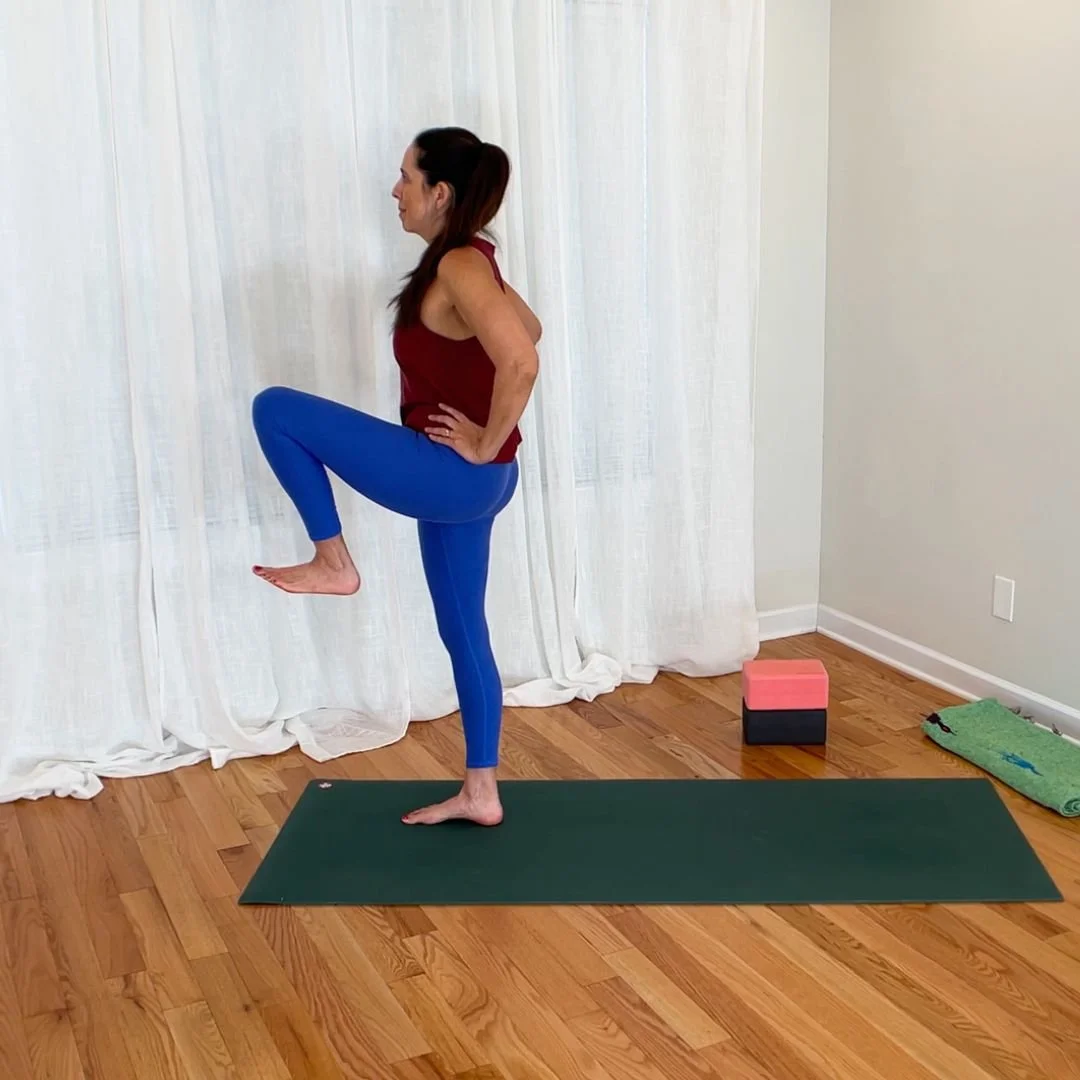
Hip flexion: bringing the thigh toward the front of the pelvis.
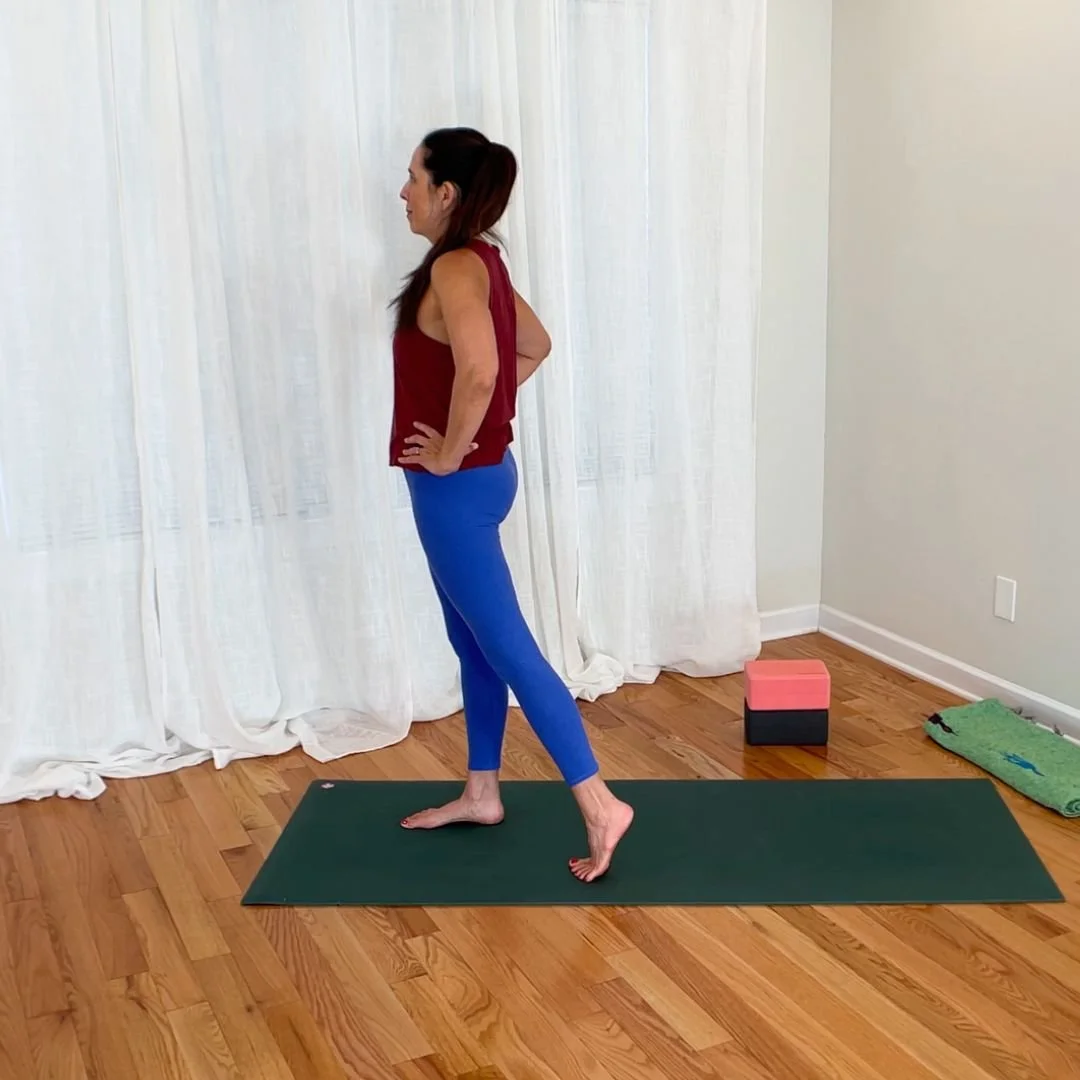
Hip extension: moving the thigh backward relative to the pelvis.
Pretty straightforward, right?
But here's where things get a little more interesting.
How Much Hip Extension Range of Motion Do We Actually Have?
We have a relatively small range of motion available in hip extension. A commonly cited normal range is approximately 0–15°, although this varies between individuals and depends on how it's measured.
That means when we reach our thigh backward relative to our pelvis, we're really not moving very far!
You can probably see this in my hip extension photo above. It's not a particularly dramatic movement.
And this is important to understand when we think about a familiar yoga pose: low lunge.
Low Lunge for Hip Flexor Stretching: Which Version Is Better?
In the yoga world, low lunge comes in two main styles: the hips-forward low lunge and the 90/90 low lunge.
It's commonly taught that the 90/90 version is the only one that truly stretches the hip flexors – but that's not quite anatomically accurate.
Let's break this down!
Hips-Forward Low Lunge
In this variation, we shift our pelvis forward, often allowing our lower back to extend (arch) as well.
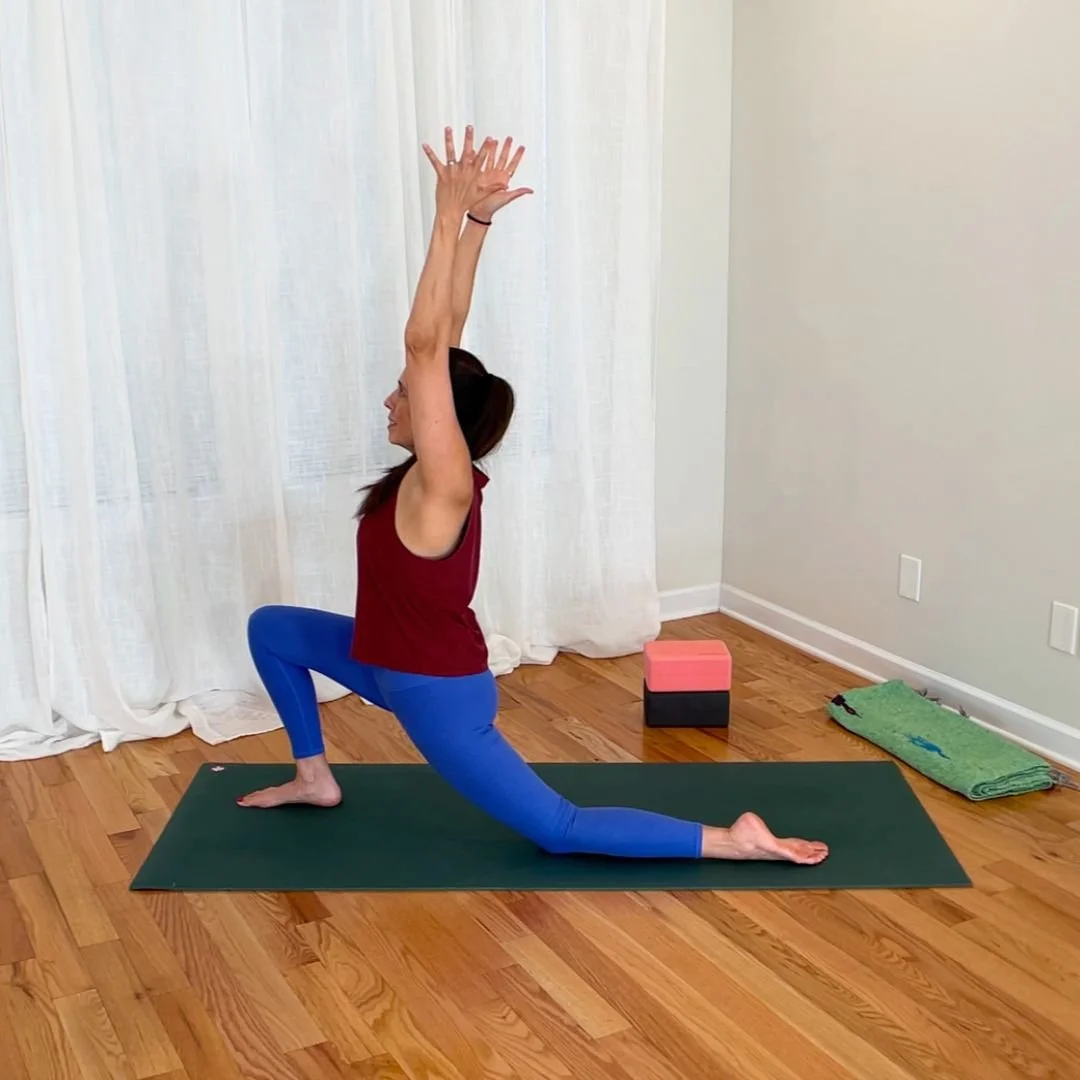
Hips-forward low lunge, combining hip extension with some lumbar spine extension.
90/90 Low Lunge With a Posterior Pelvic Tilt
In this variation, we keep our pelvis more directly above our back knee, posteriorly tilt (tuck) the pelvis, and possibly shift forward just a little while keeping our spine relatively neutral.
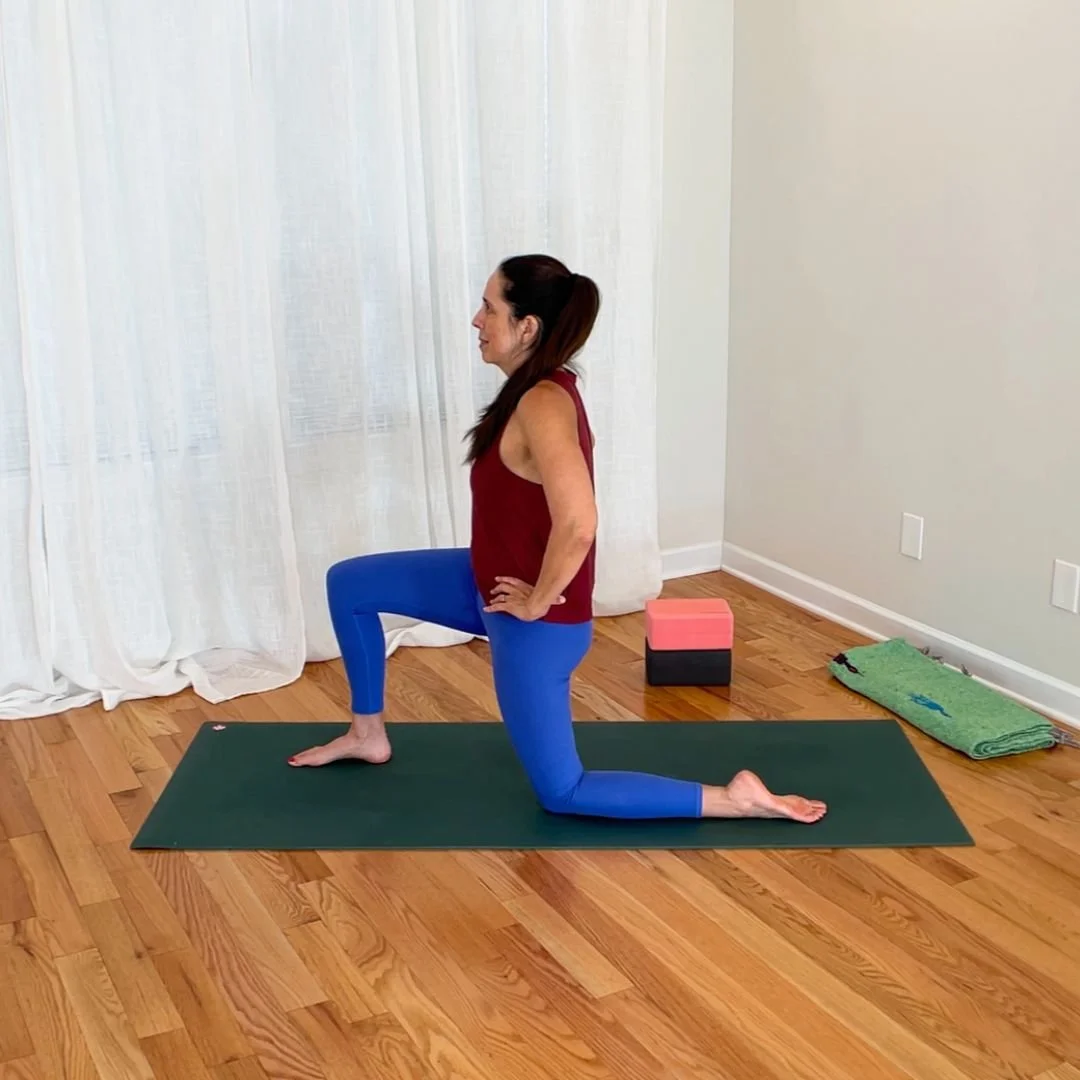
90/90 low lunge with a posterior pelvic tilt, emphasizing hip extension without lumbar extension.
Does Arching Your Lower Back Cancel Out the Hip Flexor Stretch?
Here's where some confusion comes in!
We're sometimes taught that the 90/90 version is the "correct" way to stretch our hip flexors, while the hips-forward version doesn't actually stretch them because we've moved beyond our available hip extension range of motion and added lumbar extension (a backbend) instead.
But that's not quite anatomically accurate! ☝️
In the hips-forward version, it's true that we're extending both our hip and our lumbar spine.
But the fact that we're extending our spine doesn't somehow cancel out the hip extension that's also happening here!
Because of our relationship to gravity in the hips-forward low lunge, the hip flexors are still being lengthened in this variation because we’re still in hip extension.
Ultimately, both the hips-forward and the 90/90 low lunge stretch our hip flexors. They're just emphasizing the stretch a little differently.
In the 90/90 version, we're more specifically isolating movement at the hip joint. This can create a more localized stretch sensation right at the front of the hip – and for many people, it will feel more intense or potent.
In the hips-forward version, we're stretching our hip flexors along with other tissues across the front of the body, including our abdominal muscles when the spine extends. So it's more of a global anterior body stretch, and the sensation may feel more distributed rather than concentrated at the hip.
Neither variation is inherently right or wrong. They're simply different!
How Pelvic Position Changes a Hip Flexor Stretch
Now that we've looked at the two low lunge variations, let's explore pelvic position a little further.
Remember, hip extension describes the position of the thigh relative to the pelvis. It's not simply about how far backward the leg appears to reach in space.
This means we can change the amount of hip extension by moving the thigh, moving the pelvis, or some combination of both!
For example, posteriorly tilting the pelvis while the thigh stays relatively fixed can move the hip into more extension – and this will result in increasing the stretch on the hip flexors.
And there's a great example of this that doesn't even require a lunge position!
A Supine Hip Flexor Stretch With a Yoga Block
Here's a hip flexor stretch I really love!
Start by lying on your back with a yoga block underneath your pelvis, supporting it in an elevated position.
If you extend both legs out straight, they'll angle downward toward the floor relative to your elevated pelvis.
This creates some hip extension, and therefore some lengthening of the hip flexors.
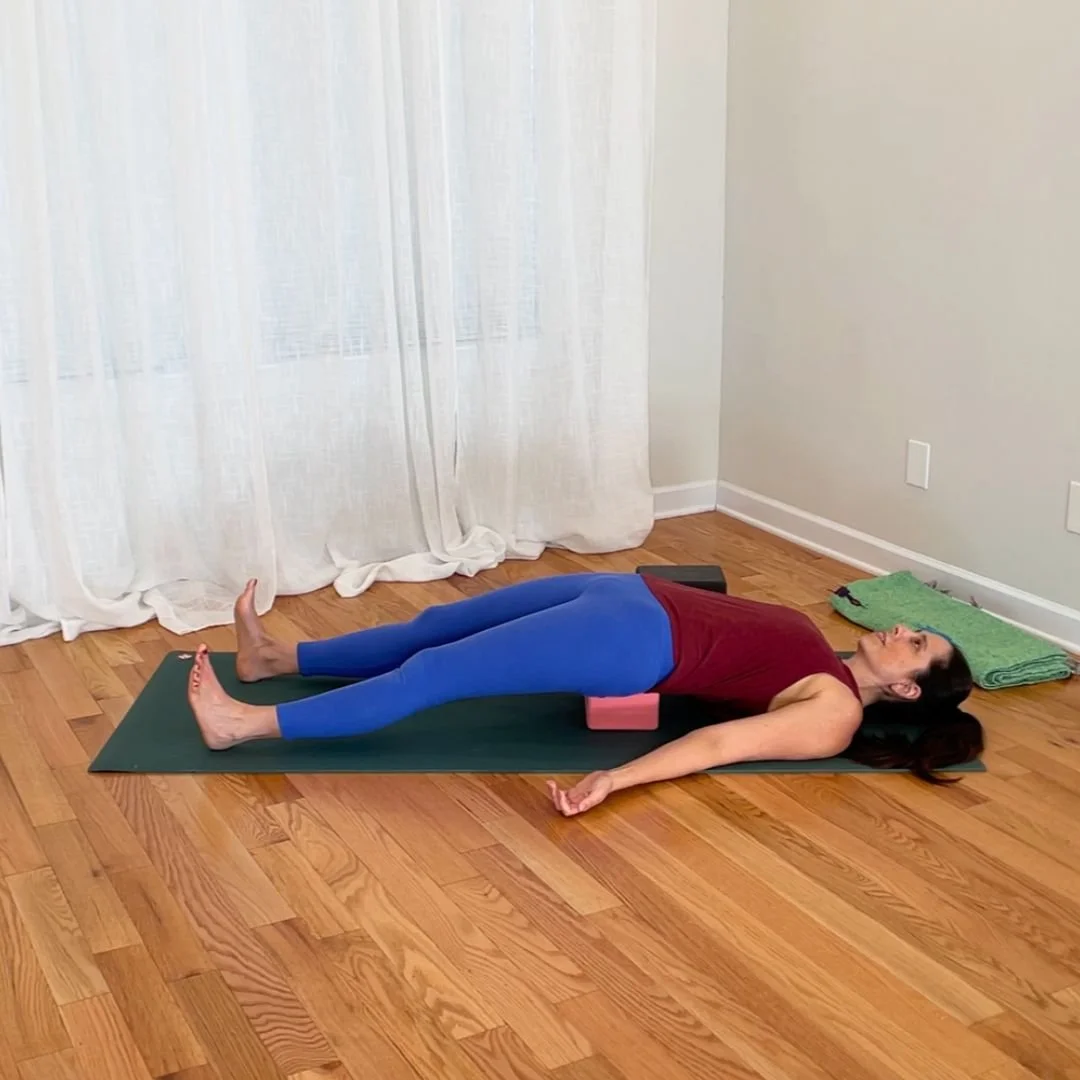
Lying on a yoga block with the legs extended can create a gentle hip flexor stretch.
But here's a way to increase this stretch:
Hug one knee toward your chest while keeping the other leg straight and reaching away from you:
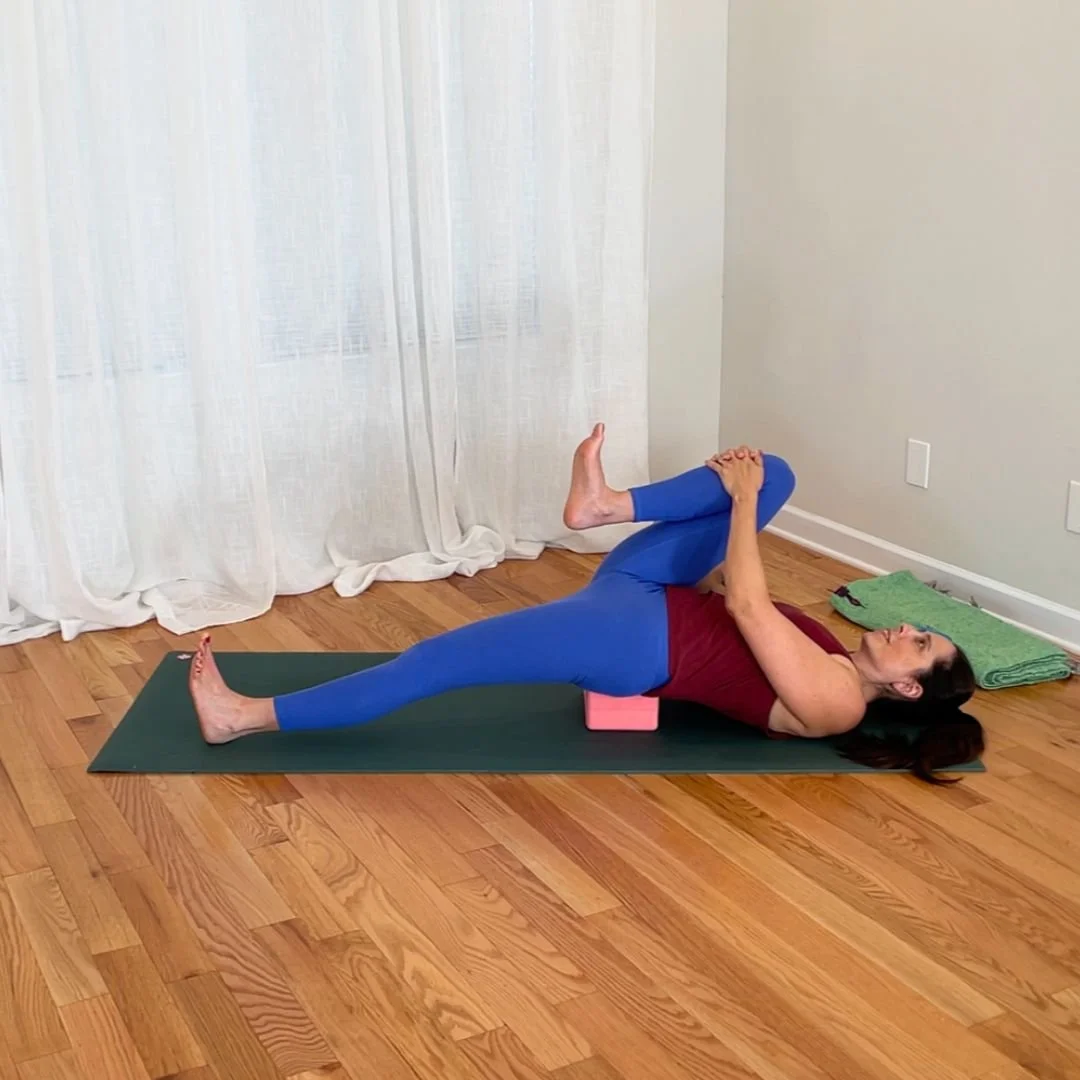
Pulling one knee in while lying with a yoga block under the pelvis increases the stretch on the hip flexors of the straight leg.
When you pull that knee in, your pelvis will posteriorly tilt. And because the opposite leg stays extended, that pelvic movement increases hip extension on the straight-leg side.
So you're increasing the stretch on the hip flexors of the straight leg, even though you're not actively reaching that leg farther backward!
Pretty cool, right?
This is another example of why understanding the relationship between the pelvis and femur can be so helpful when we're thinking about hip flexor stretching.
(I actually have a separate short video explaining the biomechanics of this exact stretch if you’re interested!)
The Hip Flexors Aren't All the Same Muscle!
So far, we've established that hip extension is the key movement for stretching the hip flexors.
But there's another important detail: our hip flexors aren't all the same muscle!
The hip flexors are a group of muscles with different attachments and functions. Some cross only the hip joint, while others cross additional joints.
Some of the main hip flexor muscles include:
Iliopsoas: The psoas major and iliacus, which are major contributors to hip flexion.
Rectus femoris: One of the four quadriceps muscles, which performs both hip flexion and knee extension.
Sartorius: A long muscle that crosses both the hip and knee and contributes to hip flexion, among other actions.
Tensor fasciae latae (TFL): A muscle at the front and side of the hip that contributes to hip flexion as well as other hip movements.
Other muscles, including the pectineus and portions of the adductor group, can also contribute to hip flexion.
So when we talk about "stretching the hip flexors," we're really talking about a group of muscles with different anatomical arrangements.
And that matters!
Why Knee Position Matters for Stretching the Rectus Femoris
Let's focus on one hip flexor in particular: the rectus femoris.
The rectus femoris is unique among the quadriceps because it crosses both the hip joint and the knee joint.
At the hip, it performs hip flexion.
At the knee, it performs knee extension.
So if we want to lengthen the rectus femoris across both joints, we need to move in the opposite directions:
Hip extension + knee flexion.
In other words, we reach the thigh backward relative to the pelvis and bend the knee.
This is why certain yoga poses and stretches can emphasize the rectus femoris more than other hip flexors.
Let's look at two examples!
Is Virasana (Hero Pose) a Hip Flexor Stretch?
First, let's consider virasana, or hero pose.
In traditional virasana, we're sitting upright with our knees deeply bent.
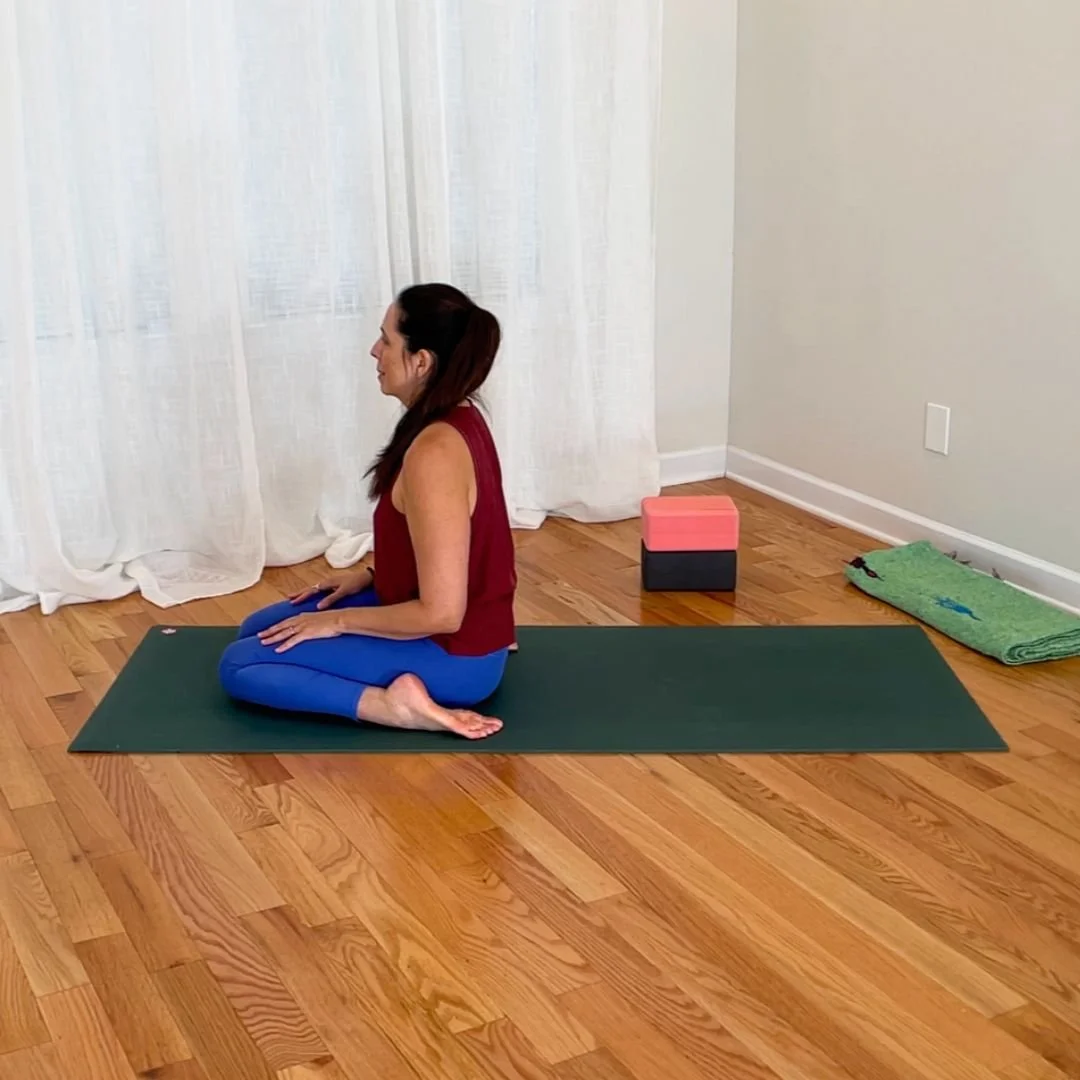
Virasana involves deep knee flexion, which can stretch the quadriceps.
Because our knees are flexed, we're lengthening the quadriceps muscles across the knee joint.
But our hips aren't in extension. In fact, they're flexed in this seated position.
So while upright virasana can be a quadriceps stretch, it's not a hip flexor stretch at the hip joint.
And this is an important distinction!
Just because a muscle crosses the hip doesn't mean every stretch involving that muscle is stretching it across the hip joint.
But what happens if we start to recline backward?
Is Supta Virasana (Reclining Hero Pose) a Hip Flexor Stretch?
Now let's look at supta virasana, or reclining hero pose.
As we lean backward from upright virasana, our hips move toward extension while our knees remain deeply flexed.
And remember: hip extension combined with knee flexion is exactly the combination that lengthens the rectus femoris across both joints!
Reclining Back Onto the Forearms
One way to practice supta virasana is to lean back onto the forearms.
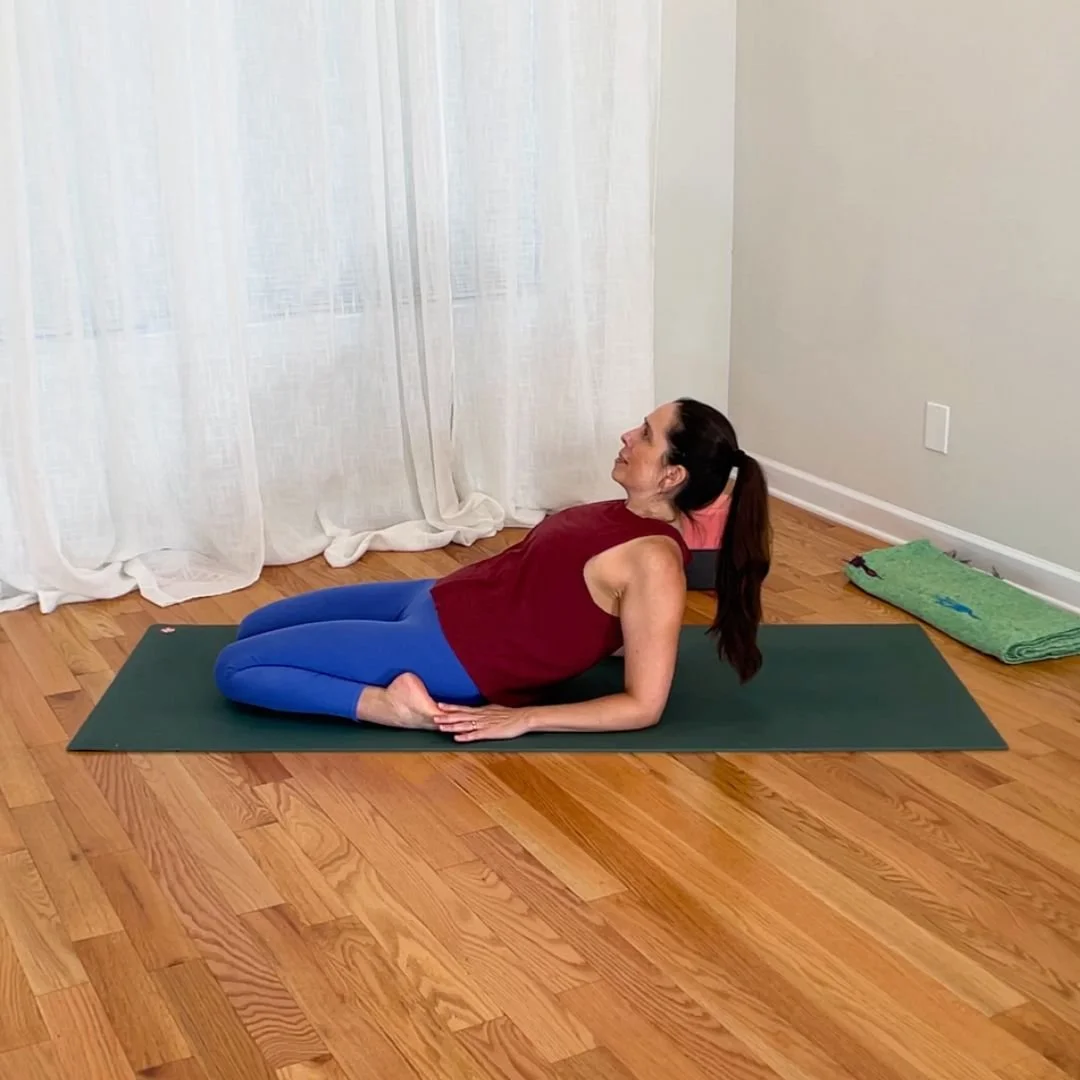
Reclining onto the forearms can increase hip extension while maintaining knee flexion.
Compared with upright virasana, we're now moving the hip into a more extended position.
This can increase the stretch on the rectus femoris, particularly because the knees remain bent.
Full Supta Virasana With the Knees Down
We can also recline farther backward if we’re able to keep our knees down and avoid arching in our low back (a.k.a. lumbar extension).
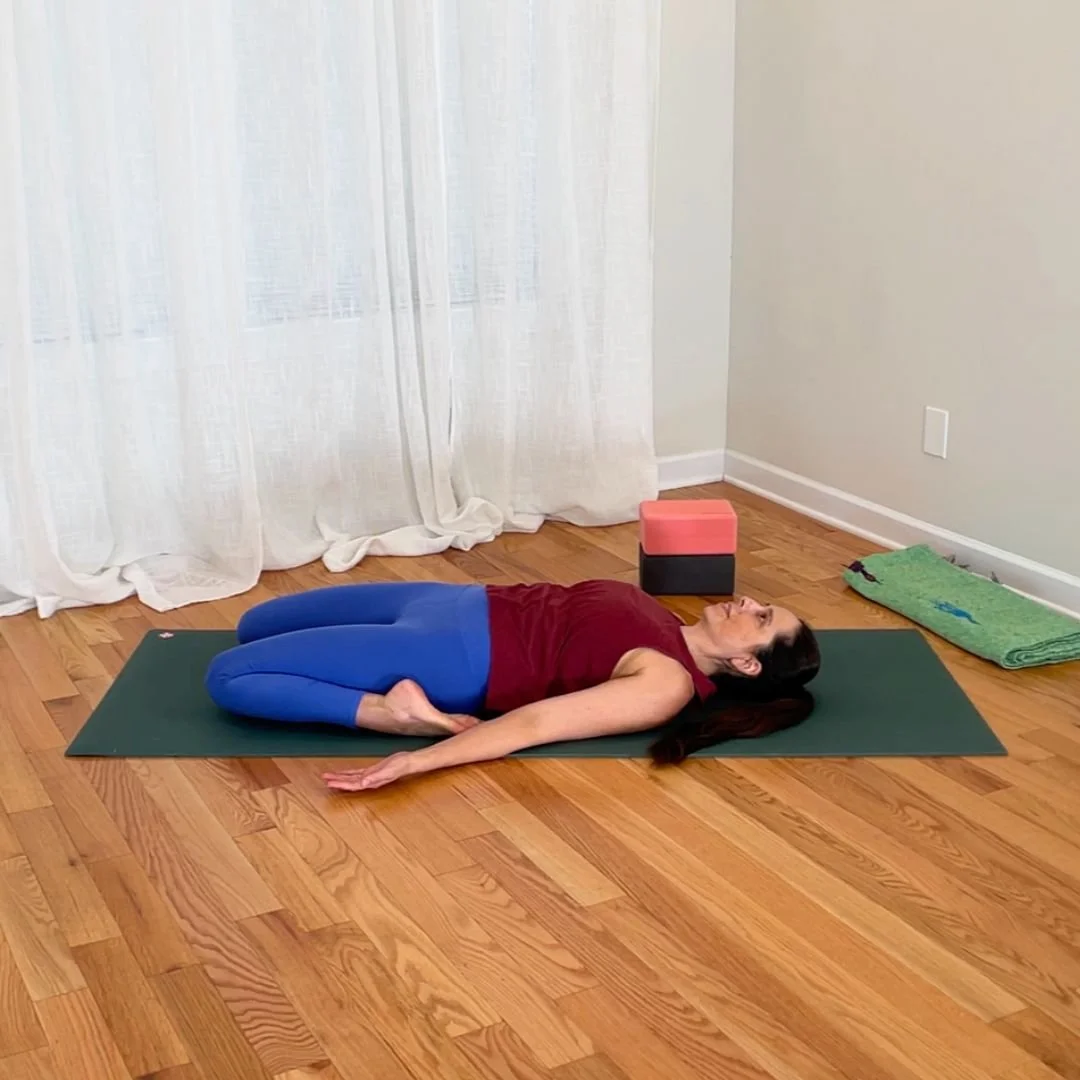
Maintaining knee flexion and hip extension in supta virasana can create a strong rectus femoris stretch.
In this variation, we're maintaining the combination of hip extension and knee flexion that lengthens the rectus femoris.
For many people, this can be a very potent stretch!
But what if we change the position?
What if the Lower Back Arches in Supta Virasana?
If we recline so far back in supta virasana that we move beyond our rectus femoris’ range of motion, our lumbar spine will sometimes arch (move into lumbar extension), and this actually means that we’ll lose our hip flexor stretch across the hip!
This is because in this relationship to gravity, if our spine arches, we’ll also anteriorly tilt our pelvis at the hip joints – in other words, we’ll move into hip flexion at the hips. And remember that in order to stretch the hip flexors, we must be in hip extension! So arching our spine here will remove the stretch we’re looking for across the hip.
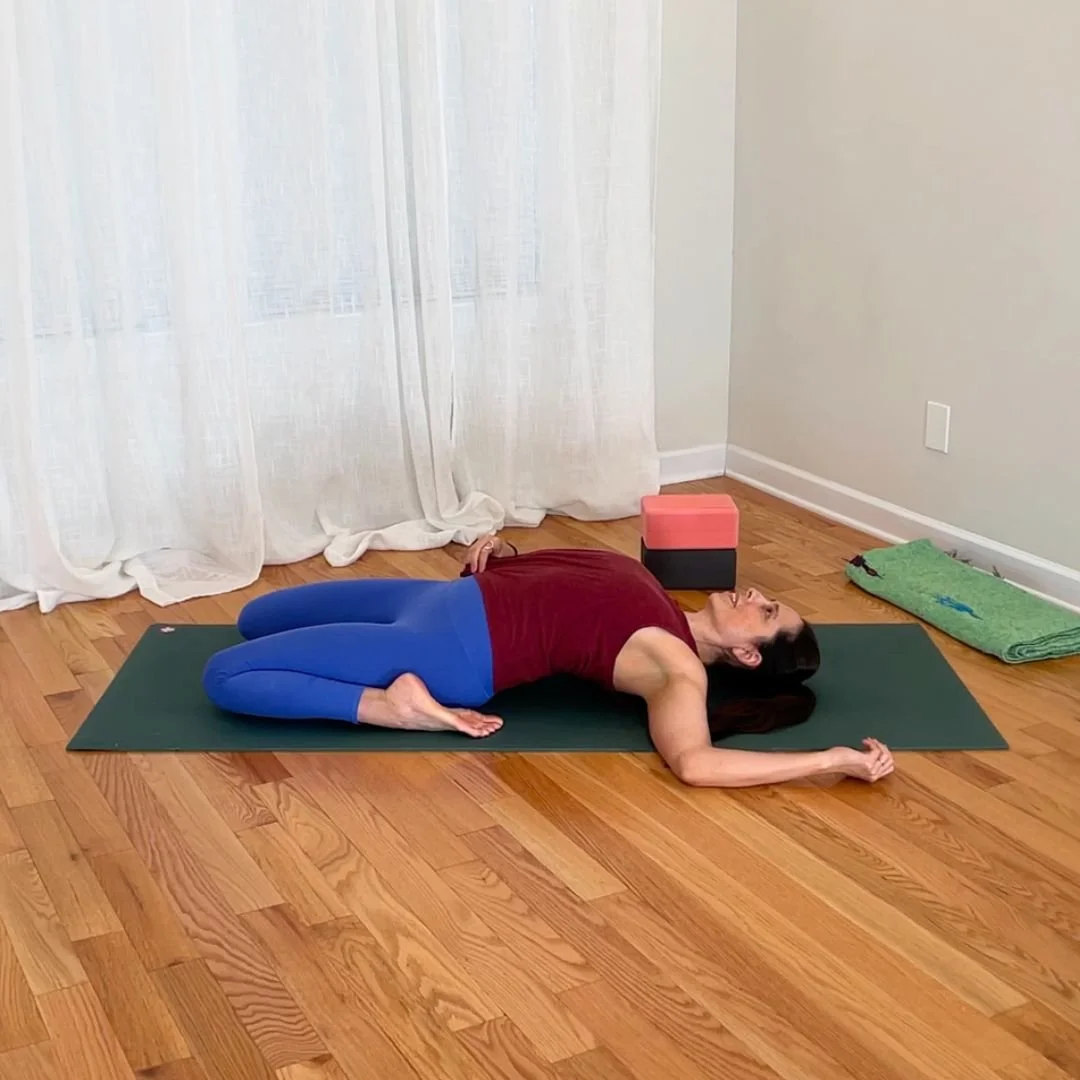
Supta virasana with an arched low back (lumbar extension).
This doesn't mean that arching the spine in this pose is wrong or inherently bad.
But if our goal is to stretch the rectus femoris (and/or the hip flexors in general), we want to keep our pelvis and spine neutral. If we can’t lie fully supine without arching our spine, we should stay higher in the pose – for example, by staying up on the forearms, like in the variation featured above!
What if the Knees Lift Off the Floor?
Another alignment change that can happen when we recline backward in supta virasana is that the knees lift up away from the floor.
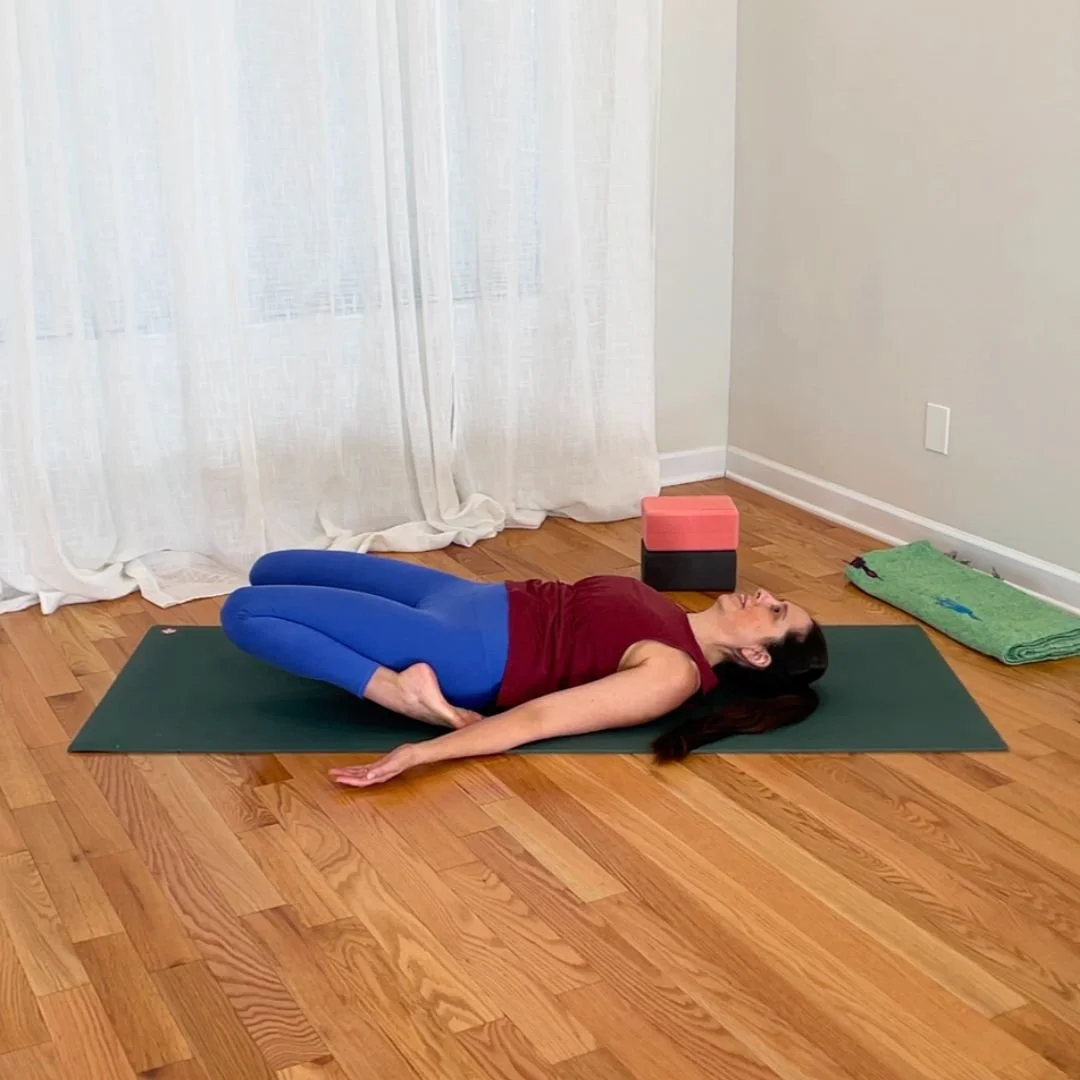
Supta virasana with the knees lifted.
If our knees lift off the floor in supta virasana, this can also reduce the stretch on the rectus femoris.
Remember, the rectus femoris crosses both the hip and the knee. As we recline backward in supta virasana, we move our hips toward extension, lengthening the rectus femoris at the hip. But if we recline farther back than our available flexibility allows, our knees may start to lift off the floor.
When this happens, our thighs lift along with our knees, bringing our hips into more flexion. This allows the rectus femoris to shorten at the hip, reducing the stretch – even though our knees remain just as bent!
In other words, we may not have enough rectus femoris flexibility to recline all the way back and keep our knees grounded.
The takeaway? Supta virasana can be a hip flexor stretch, particularly for the rectus femoris muscle. But the amount of hip extension, knee flexion, and lumbar extension all influence how this muscle is being lengthened.
Does the Couch Stretch Stretch All the Hip Flexors?
Now let's consider another popular hip flexor stretch: the couch stretch.
This stretch is often performed with one knee bent and positioned near a wall, the shin extending up the wall behind us, and the torso upright or moving toward upright. (We also often see this stretch done on a couch at home – which is where it gets its name! :) )
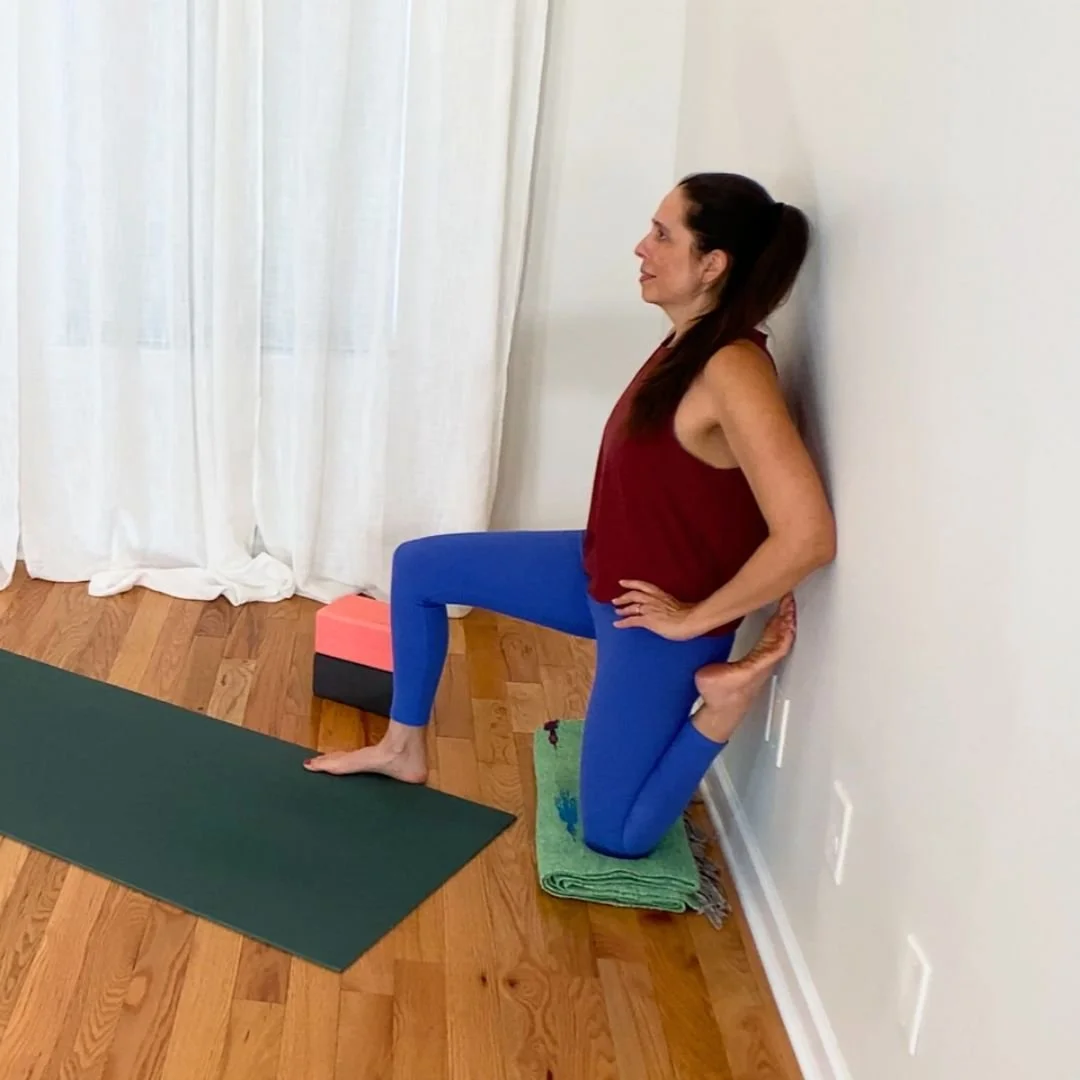
The couch stretch combines hip extension and knee flexion, emphasizing the rectus femoris.
The couch stretch combines two movements we've already discussed:
Hip extension
Knee flexion
Sound familiar?
That's the combination that lengthens the rectus femoris across both joints!
So yes, the couch stretch is a hip flexor stretch – but there's an important nuance.
Why the Couch Stretch Emphasizes the Rectus Femoris
Because the knee is deeply flexed, the rectus femoris is already being lengthened at the knee joint.
As we move the hip into extension, we're lengthening it at the hip joint as well.
This means the couch stretch can create a particularly strong stretch for the rectus femoris.
But here's something interesting:
That doesn't necessarily mean we're stretching all of our hip flexors equally!
For example, the iliopsoas doesn't cross the knee joint. So bending the knee doesn't lengthen the iliopsoas the way it lengthens the rectus femoris.
In fact, the rectus femoris may become the limiting factor in how much hip extension we can access in the couch stretch.
That means we might feel a very intense stretch across the front of the thigh and hip, even before we've reached the amount of hip extension that would more fully lengthen some of the other hip flexors.
So while the couch stretch can certainly stretch the hip flexors, it emphasizes the rectus femoris more than a variation that doesn't include such deep knee flexion.
And that's not a problem!
It's simply another example of how different hip flexor stretches can emphasize different muscles.
So What's the Best Way to Stretch Your Hip Flexors?
After looking at all of these examples, we can return to our original question:
How do we actually stretch the hip flexors?
The simple answer is: move the hip into extension.
But the more nuanced answer is that pelvic position, knee position, and the anatomy of the individual hip flexor muscles all influence which tissues we're lengthening and how the stretch feels.
Here's a quick recap:
Hips-forward low lunge: Stretches the hip flexors along with other tissues across the front of the body, often creating a more global anterior-body stretch.
90/90 low lunge with posterior pelvic tilt: Emphasizes hip extension with a more neutral spine, creating a more localized stretch at the front of the hip.
Supine yoga block stretch: Uses the relationship between the pelvis and the yoga block to create hip extension, with a posterior pelvic tilt increasing the stretch if we bend one knee into our chest.
Upright virasana: Stretches the quadriceps across the knee but doesn't place the hip flexors into a lengthened position at the hip.
Supta virasana: Can lengthen the rectus femoris across both the hip and knee, especially when hip extension and knee flexion are maintained.
Couch stretch: Combines hip extension with deep knee flexion, potentially emphasizing the rectus femoris more than other hip flexors.
And perhaps the most important takeaway of all?
There isn't just one "correct" hip flexor stretch.
Different stretches create different joint positions and different demands on the body. Once we understand the anatomy and biomechanics, we can make more informed choices about which stretches to practice or teach – without needing to label one variation as universally right and another as wrong.
Watch: How to Actually Stretch Your Hip Flexors (Video Tutorial)
If you'd like to see all of this in action, I break down these concepts in my video tutorial, complete with visual demonstrations of low lunge, supta virasana, the couch stretch, and more!
[EMBED MAIN YOUTUBE VIDEO: https://youtu.be/3rYo6x6qm6M]
I hope this helps clarify some of the anatomy and biomechanics behind hip flexor stretching! 🤓
Video: Anatomy of the Reclined Single-Leg Hip Flexor Stretch
Frequently Asked Questions About Hip Flexor Stretching
Do You Need to Tuck Your Pelvis to Stretch Your Hip Flexors?
Basically, yes! The most important requirement for stretching the hip flexors is to move into hip extension. The pelvis can posteriorly tilt relative to hip joints, and it can also posteriorly tilt relative to the spine. In order to stretch the hip flexors, the pelvis must posteriorly tilt relative to the hip joints – and this direction of motion is analogous to hip extension. So yes, to stretch your hip flexors, you need to posteriorly tilt your pelvis at your hip joint (a.k.a. extend your hip!).
Does Arching Your Back Prevent a Hip Flexor Stretch?
Not necessarily. Lumbar extension and hip extension can happen at the same time. Arching the back doesn't automatically cancel out hip extension, although it can change how much of the overall movement occurs at the hip versus the spine.
Is the Couch Stretch a Hip Flexor Stretch or a Quad Stretch?
Both! The rectus femoris is a quadriceps muscle and a hip flexor. Because the couch stretch combines hip extension with knee flexion, it can strongly emphasize the rectus femoris while also lengthening other hip flexors to varying degrees.
Does Supta Virasana Stretch the Hip Flexors?
Yes, it can – particularly the rectus femoris. Reclining backward from upright virasana can increase hip extension while maintaining knee flexion, lengthening the rectus femoris across both joints. The exact stretch depends on the positions of the hips, knees, and spine.
Why Do Some Hip Flexor Stretches Feel More Intense Than Others?
Different stretches can emphasize different muscles, create different joint angles, and distribute stretch sensations across different areas of the body. A more intense or localized sensation doesn't automatically mean one stretch is better or more effective than another.
You Might Also Like…