Is “Navel to Spine” Actually Effective? What New Research Says About Core Engagement
This article was originally shared in my email newsletter, where I send free, research-informed insights about yoga anatomy, biomechanics, and movement science every 1–2 weeks. Sign up here!
New Research on the “Navel to Spine” Cue
I came across a brand-new study this week on “activating your core” vs. “relaxing your core” for chronic low back pain. Isn’t that such a relevant topic for us yoga/movement teachers and practitioners? Core engagement cues like “navel to spine” come up all the time in yoga and Pilates classes.
This new research looks at the cue:
👉 “pull your navel to your spine” (or “engage your core” – a common core stability cue)
And whether doing that actually improves outcomes.
What Is the “Navel to Spine” Cue Supposed to Do?
Before we get into the study, I want to zoom out for a second – because this is something I’ve written about before!
In many yoga, Pilates, and fitness spaces, we’re taught to draw the belly inward – often described as “pulling the navel to the spine.”
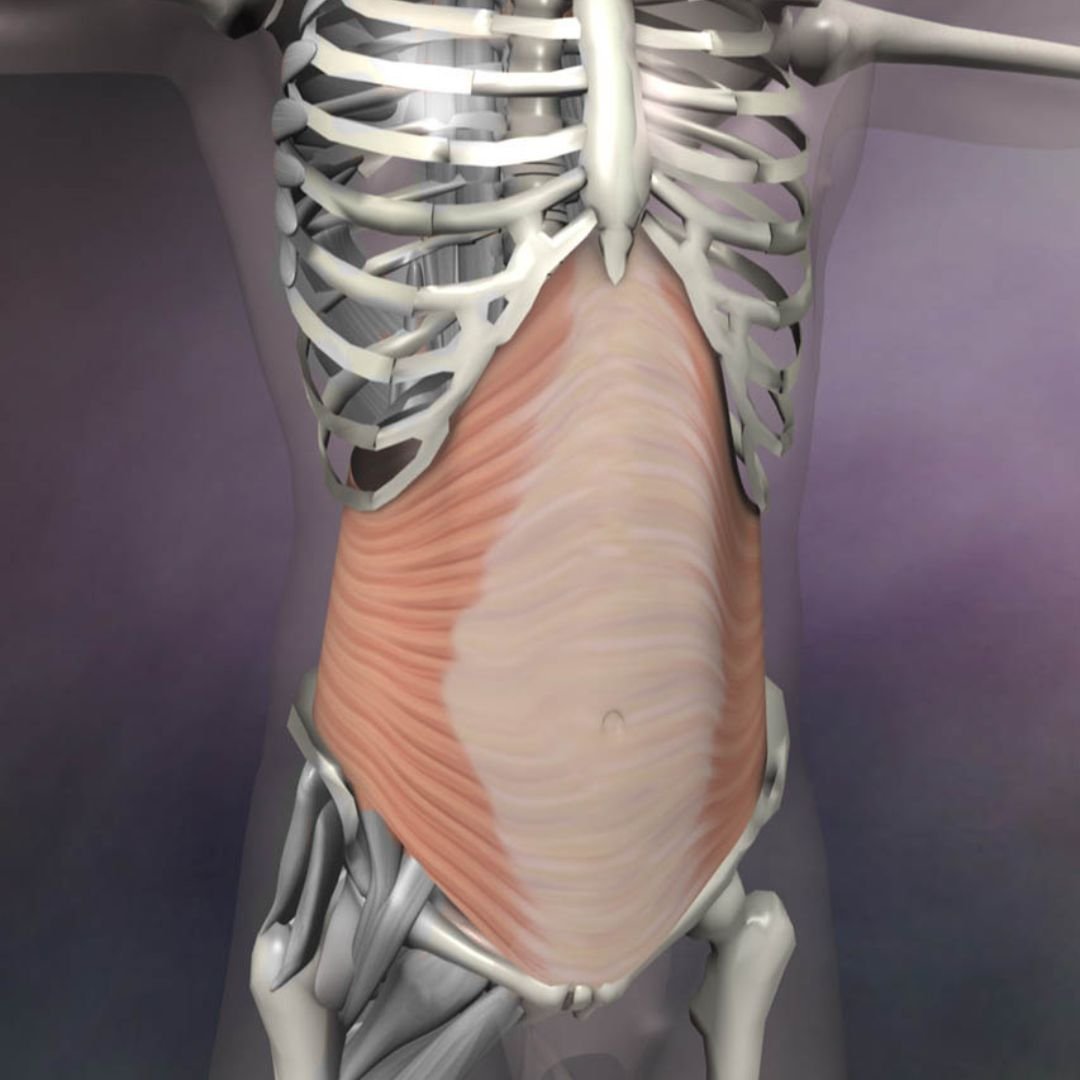
This cue refers to consciously drawing the abdominal wall inward in an effort to:
👉 activate deep core muscles
👉 stabilize the spine
👉 and protect the low back
What Does Research Say About Core Stability?
But when we look closely at the research behind this idea, a few important things stand out:
👉 A healthy spine is already an inherently stable structure
👉 Stability is a dynamic, whole-body process
👉 And it’s coordinated automatically by the nervous system
Which leads to this important insight:
Stability is not something we manually “turn on” by consciously engaging specific muscles. It’s a dynamic process that your nervous system coordinates reflexively and automatically in response to the movement task at hand.
So… Is Conscious Core Engagement Actually Necessary?
This raises an important question: If stability already happens automatically… does consciously “engaging the core” actually help? 🤔
And that’s exactly what this new study set out to test!
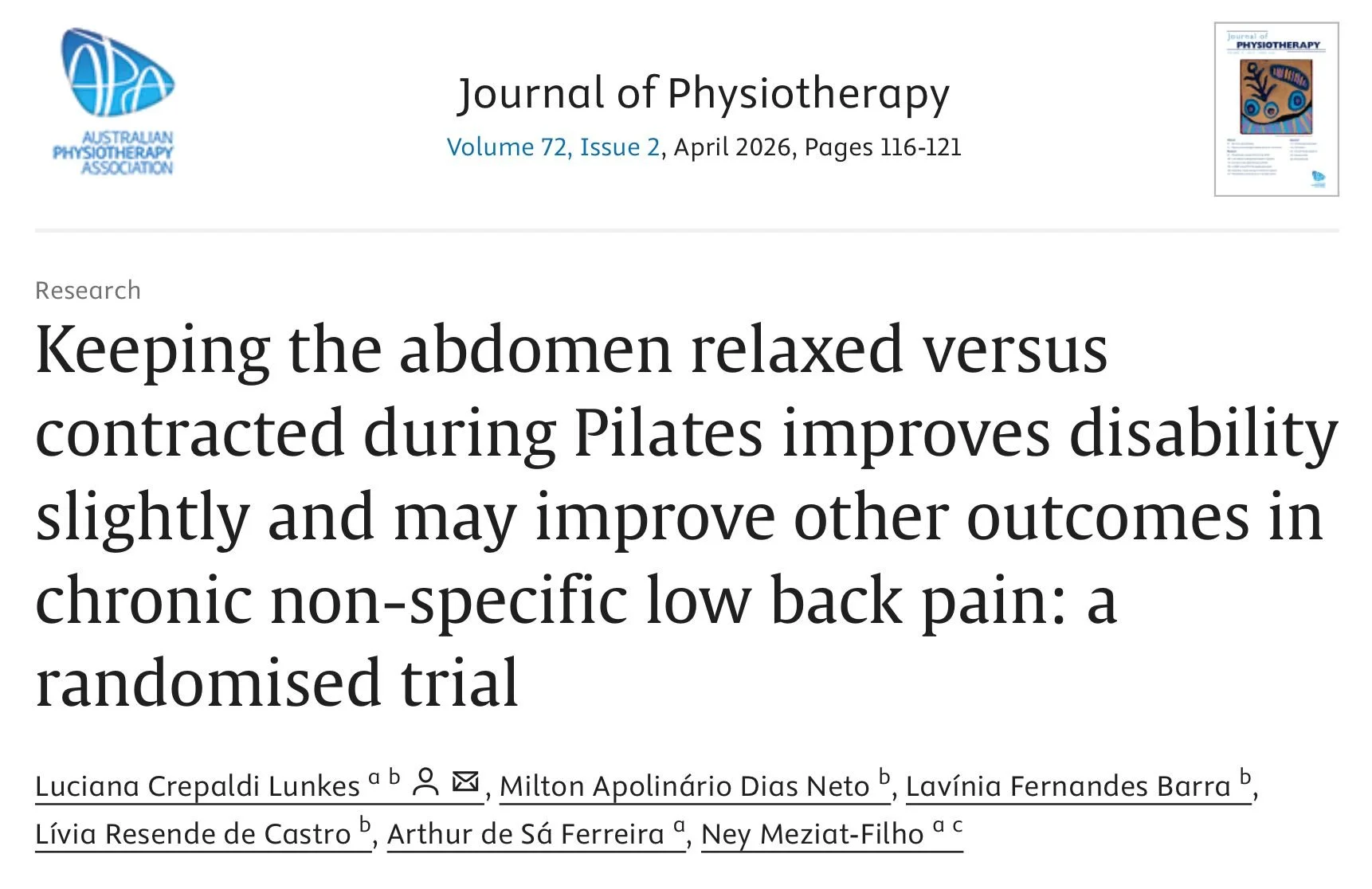
What Did This New Study on Core Engagement Investigate?
Researchers took 150+ people with chronic low back pain and had them follow the same Pilates program for 12 weeks.
The only difference?
One group was instructed to keep their core engaged throughout
The other group was instructed to perform the exercises in a relaxed and smooth way, with zero cues given about activating the core
This is the first study to investigate the effectiveness of relaxing the abdomen in Pilates – as compared to the traditional approach of consciously contracting it – for chronic low back pain.
What Did the Study Find?
Both groups improved quite a bit. But:
👉 The relaxed core group had slightly greater improvements in disability
👉 And for pain and function, keeping the core relaxed was as good as or slightly better than contracting the core
In other words, actively contracting the core didn’t lead to better outcomes. And relaxing the core may have even had a small advantage!
According to the researchers, "These results challenge the conventional emphasis on core activation in Pilates for chronic low back pain and present an alternative strategy to mildly improve efficacy of this intervention."
Why This Challenges the “Engage Your Core” Cue
What’s especially interesting is how the authors interpret these findings.
They suggest that overly focusing on engaging the core may actually:
increase tension
create more rigid movement
encourage guarding behaviors
and increase effort unnecessarily
So when we put this together with what we already know from research – that stability is an automatic, reflexive process coordinated across the whole system and constantly adapting to the task – it starts to make sense why trying to hold a constant “core contraction” might not be helpful.
A More Modern Approach to Core Stability
A more modern approach to the core might look like this:
👉 We don’t need to micromanage our core in every movement
👉 We don’t need to constantly “draw the belly in” or "pull the navel to the spine"
👉 And we don’t need to treat stability like a switch we must consciously flip on
Instead, we can be assured that the body is already very good at organizing stability on its own.
Movement itself is often what helps with chronic low back pain – not consciously trying to activate specific core muscles – and allowing for more natural, relaxed movement may actually be beneficial.
What This Means for Yoga and Movement Practice
If you’ve ever felt unsure about how much to “engage your core” – or whether you’re doing it “right” – this research is a really helpful reminder. There probably isn’t one perfect way, and your body doesn’t need that level of micromanaging to function well.
If you have friends, students, or colleagues who might benefit from this optimistic, evidence-based perspective on the core, please feel free to share this blog post with them!
Learn More About the Spine and Core
And if you’d like to go deeper into this topic, I cover all of this in much more detail in my course Applied Anatomy for Yogis: The Spine & Core.
In this 3.5-hour course, we look at the anatomy and function of the spine, the biomechanics of spinal movement, common myths about the spine and core, and what a more modern, evidence-based approach can look like in yoga and movement – including where cues like “navel to spine” fit in.
You can access this course as part of my Continuing Education membership, which starts with a 7-day free trial and is $29.99/month after that for unlimited access to 60+ hours of CE content (all eligible for Yoga Alliance CE hours), plus my full Yoga Class Library with 300+ classes!
Related Blog Post: A Modern Approach to Core Stability: Is Navel-to-Spine the Best Cue?
Related Video on the “Navel-to-Spine”/”Engage Your Core” Cue:
You Might Also Like…