5 Unique Core Strengtheners for Yogis
This article was originally shared in my email newsletter, where I send free, research-informed insights about yoga anatomy, biomechanics, and movement science every 1–2 weeks. Sign up here!
“The core” is a bit of a nebulous term with a wide range of definitions – have you noticed?
When it comes to yoga, core strength is often framed as something we build through familiar movements like boat pose, plank, or various abdominal-focused drills.
But from a movement science perspective, the core is far more expansive than just the front of the body.
In fact, when we zoom out and look at the anatomy and biomechanics of core strength, we discover that effective core training for yogis involves the entire trunk in a dynamic, three-dimensional way.
What Exactly Is “The Core”?
“The core” is one of those terms that means something slightly different depending on who you ask. In yoga, fitness, and rehab, you’ll hear definitions ranging from “the abdominals” to “everything between your shoulders and hips.”
From a movement science-based perspective, I define the core as all of the muscles that attach to and move or stabilize the spinal column. This includes the front, sides, and back of the torso and spans from the cervical spine (the neck) all the way down to the pelvis. When you think about it this way, the core is a whole integrated system rather than just one muscle group.
This broader definition also helps us understand why effective core training for yogis should go beyond classic abdominal work. A strong and resilient spine requires movements that challenge stability, strength, control, and coordination in multiple directions.
With that in mind, here are 5 unique core strengtheners for yogis that target much more than just the abdominals. These are science-informed exercises that combine spinal stability, full-body integration, and controlled mobility. They’re also a fun way to bring variety into your yoga or strength practice.
1) Single-Leg Bridge with Hip Circle

At first glance, this may appear to be a hip mobility or glute strength drill – and it is! – but it’s also secretly one of the most underrated core stability exercises you can include in your yoga practice.
In this variation, the working leg moves in a circular pattern while your pelvis stays elevated in a bridge position. As the leg sweeps in multiple directions, the torso has to resist rotation and lateral shifting. This means your integrated core, including the spinal erectors and lateral core muscles, work continuously to keep the pelvis and torso steady.
If you’ve been looking for a more nuanced way to train core control, this bridge variation is an excellent choice! It also carries over nicely to yoga poses that require pelvic steadiness, such as single-leg balances, warrior variations, and transitions.
2) Bird Dog Pull-Through
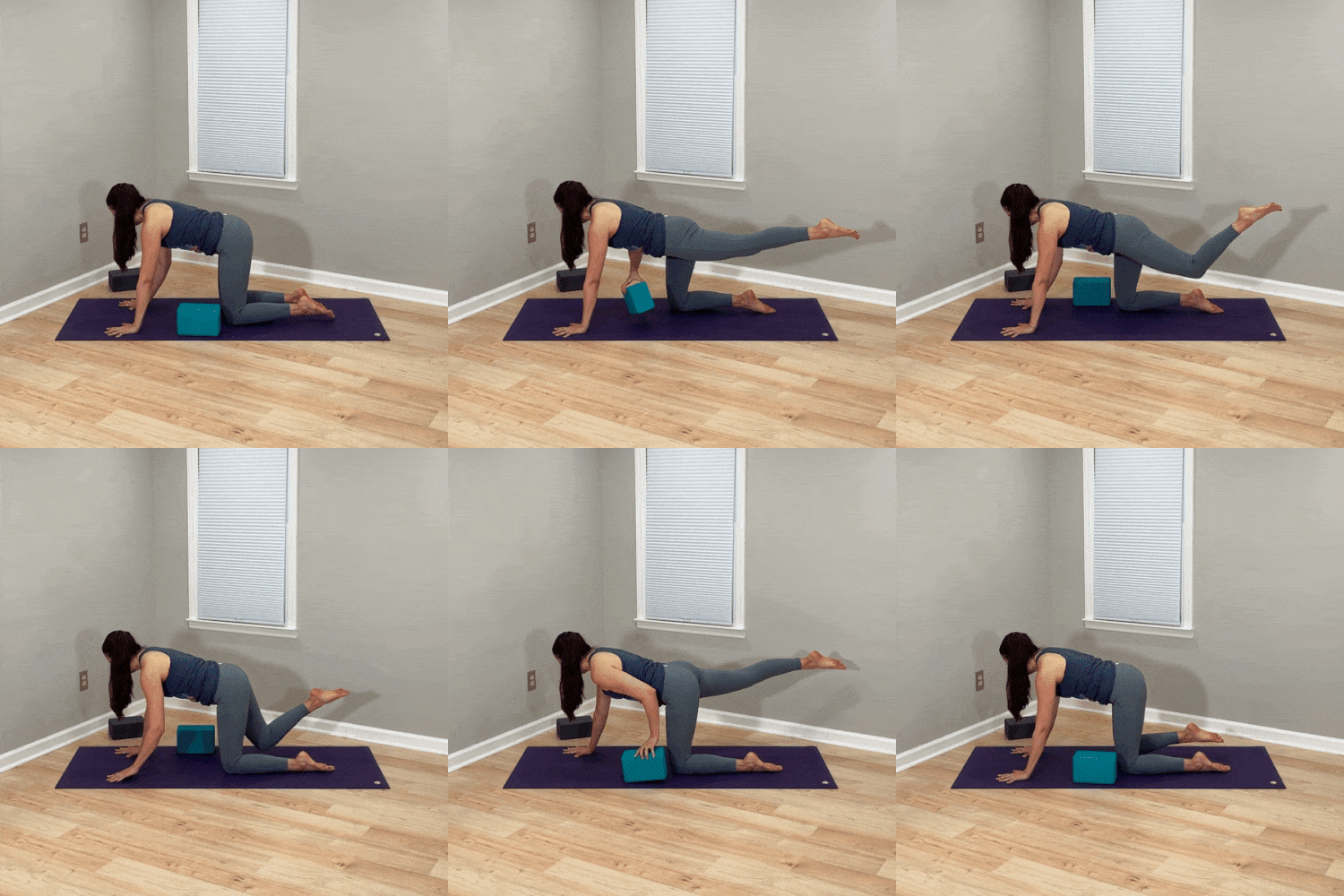
Traditional bird dog is already a staple for spinal stability. This variation adds a new layer of challenge by incorporating cross-body coordination and perturbation.
Instead of reaching the arm straight ahead, the moving arm reaches across the body to pull an object from one side to the other while the opposite leg extends back. The shifting object increases instability, which requires the core to respond reflexively and stay organized as your weight subtly shifts.
If you choose to use a weight instead of a yoga block, you’ll add an even more pronounced strengthening stimulus. This makes it a fantastic option for yogis who want to build real-world core strength that carries over to transitions, inversions, crawling patterns, and unstable shapes on the mat.
3) Full-Range Side Plank Dips
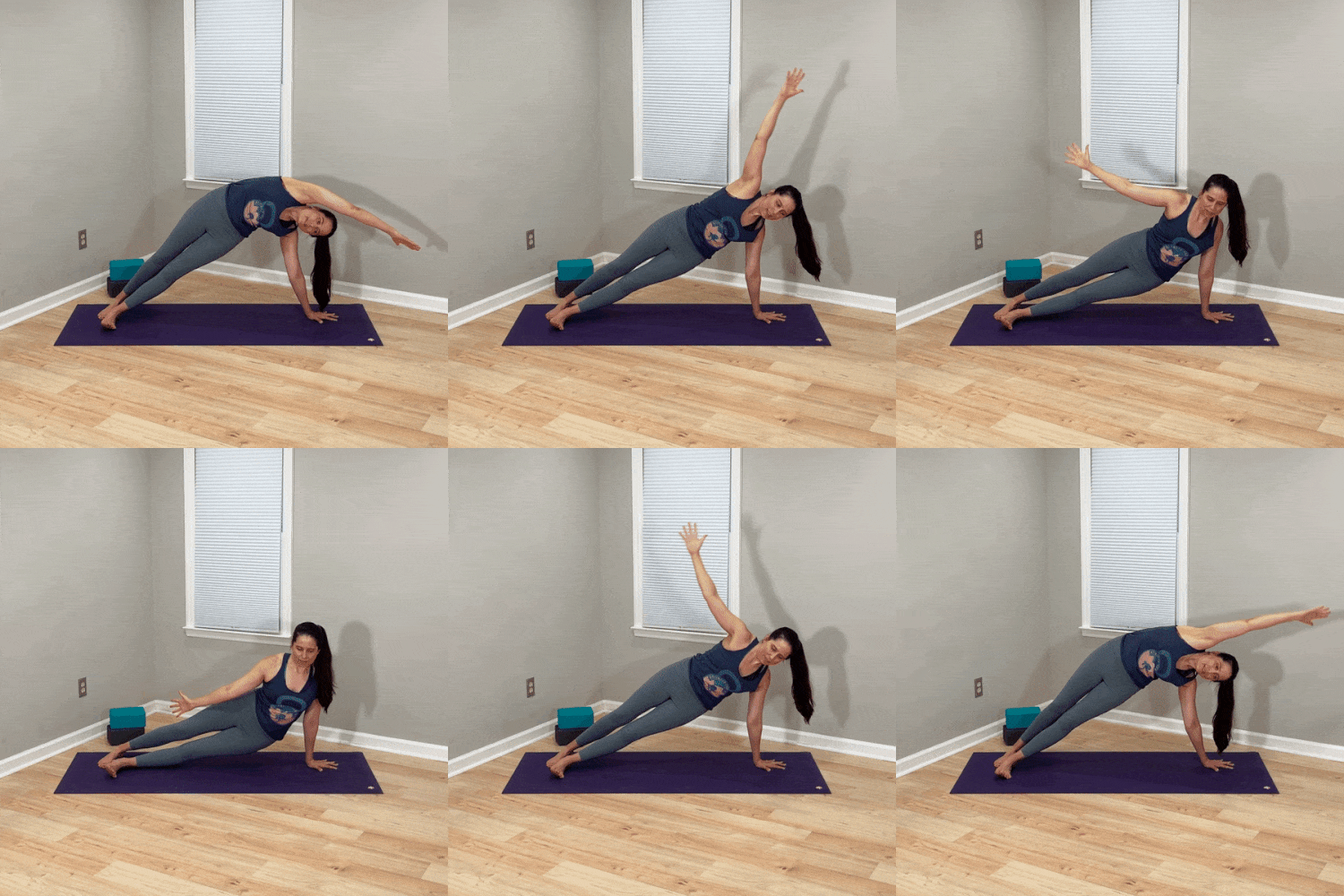
Side plank is most often practiced as a static hold, targeting the lateral core isometrically. But when we add an up-and-down movement through the hips, the exercise becomes a dynamic strengthener that challenges the obliques (and lateral hips!) through a full range of motion.
As you lower and lift your hips, the side body completes a controlled arc. This increases demand not just on the obliques but also on the quadratus lumborum, glute medius, and other core muscles that help maintain that side-facing alignment. Dynamic variations like this can often lead to greater strength gains compared to static positions and help build resilience for poses such as wild thing, other side plank variations, and uneven weight-bearing transitions.
4) Plow Pose (Halasana) Eccentric Lowers
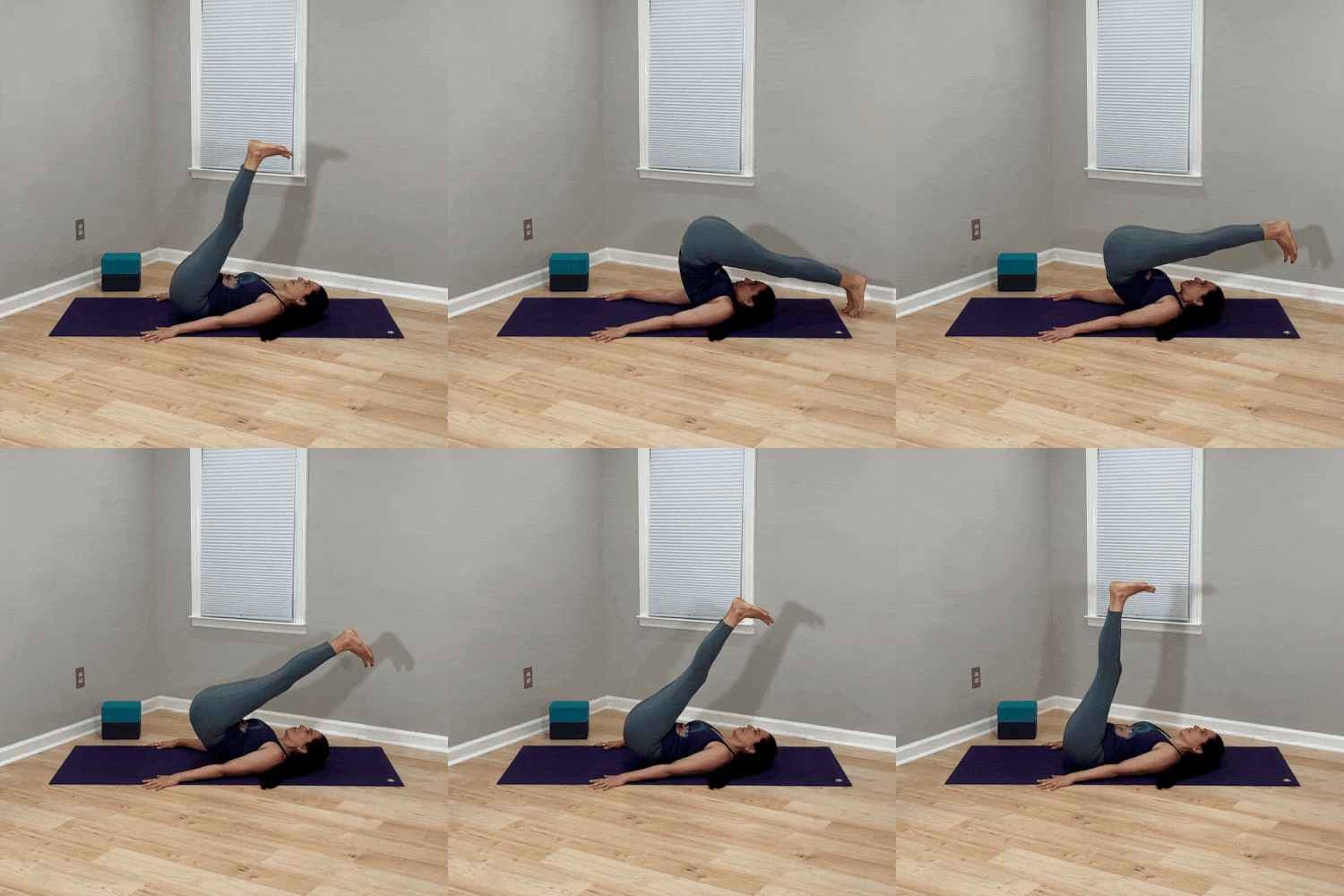
In this move, we use momentum to rock our legs up and back behind us into plow pose (halasana), and then we slowly lower back down, articulating our spine with control as we set our upper back, mid back, and lower back down in sequence.
By controlling the lower down, we focus on the eccentric phase of the movement – and while our abdominals definitely work here, our posterior shoulders also work (!) as we press our arms down into the floor to control the movement.
Side note: in the strength world, this move is often referred to as a “reverse crunch”.
For yogis who enjoy inversions or transitions that roll along the spine, this exercise builds control, mobility, and strength.
5) Two Additional Unique Core Strength Moves Covered in the Video!
In my video tutorial, I cover these moves in this blog post in more detail (with visuals, cueing tips, and modifications), and I cover two more movements that rounds out this collection of core exercises for yogis. The video includes detailed biomechanical explanations, technique cues, and options for regressing or progressing each movement so you can tailor them to your practice.
If you’re interested in training your core in ways that go beyond standard abdominal work and better reflect the full potential of the spine to move, you’ll find plenty to explore!
I hope these give you a few new ways to explore your core… and maybe enjoy a little of that “evil” fun along the way. If you give any of them a try, let me know what you think!
Related Articles:
You Might Also Like…