Long Holds vs. Dynamic Movement in Yoga: Which Builds More Strength?
This blog post was first sent to Jenni’s email list as an email newsletter. Sign up for the JRY email newsletter here!
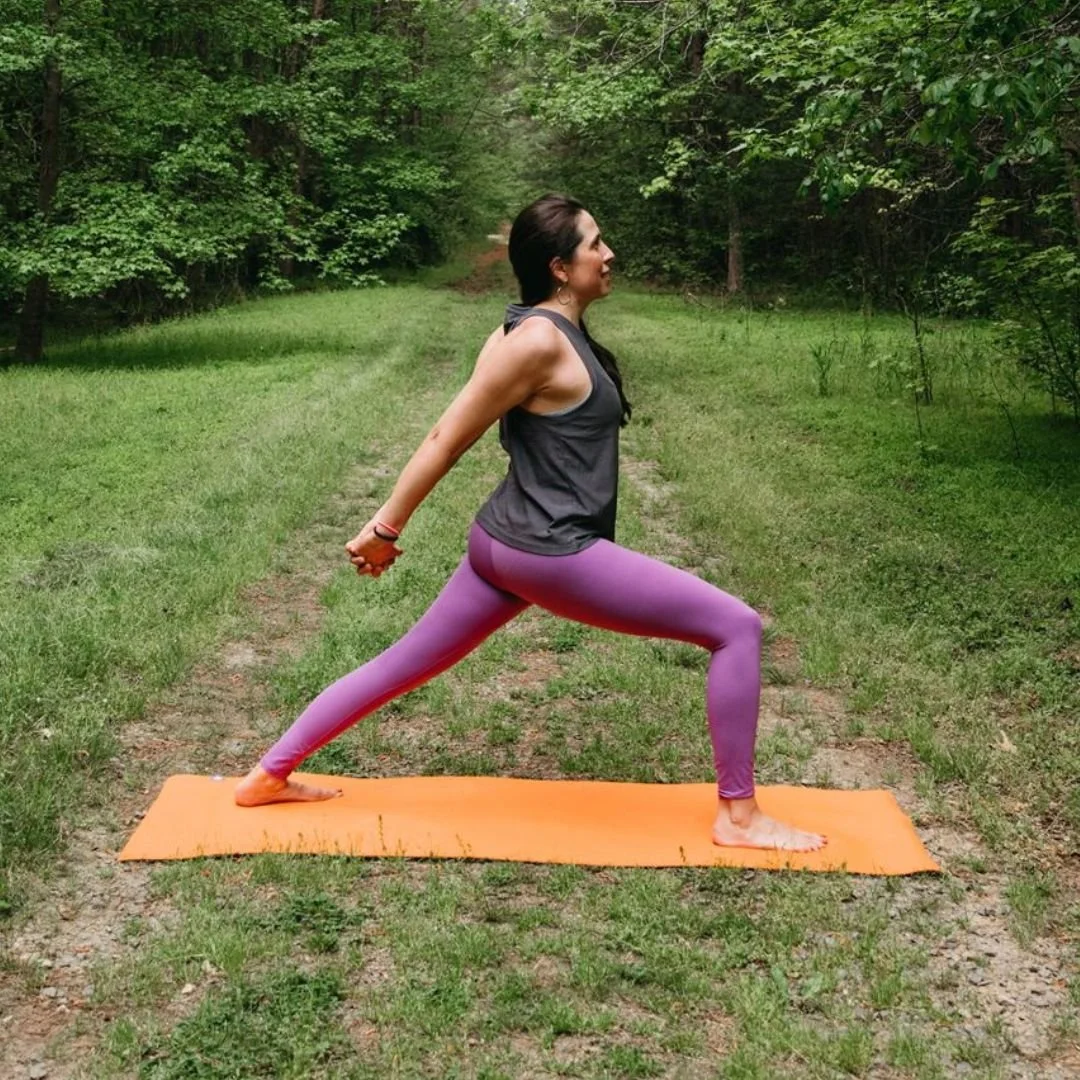
Many yoga practitioners wonder whether long-held yoga poses or flowing yoga sequences are better for building strength. And if long holds do build strength, are they actually “functional” in a meaningful way?
I recently received a great question from a yoga teacher about this exact topic – long holds in yoga asanas versus dynamic movements on the mat – and I thought our movement geeky community would find it interesting! 🤓
Before sharing the question itself, let’s quickly define two key types of strength training.
What’s the Difference Between Isometric and Dynamic Strength Training?
Isometric strength training involves holding a position statically while our muscles generate force without changing length (e.g., holding a plank or a squat for a set duration of time).
Isotonic (dynamic) strength training involves moving in and out of a position, working through both the concentric (shortening) and eccentric (lengthening) muscle actions (e.g., squatting down and standing back up).
Both can build strength and muscle – when performed with adequate intensity and structure.
A Yoga Teacher Asked: Are Long Holds Actually Functional?
Now here’s the message I received from this yoga teacher! ⬇️
“Hi Jenni I have a question and I think you're the person to address it...
Yesterday I went to my friend's class with my twins..it was good for them as they are stiff teens and to hold anything for a long time was hard.
It got me thinking no wonder some people find my class fast 😂. I do mobility flows and a few holds but not like a warrior 2 for five breaths that becomes 20 odd as she was adjusting someone... Happens.... Then into side angle..the extended side angle reaching over .. everything hurt by that point 😂😂😂😂 and I thought damn, this is hard.
But my Q is those kind of isometric holds - they build strength but how functional are those classic moves?
Isn’t flowing movement going to build strength faster?”
Do Long Yoga Holds Build Strength?
I responded to this yoga teacher directly, and then I expanded on my response (a lot hehe!) for this blog post! 🤓 So here’s my very expanded answer to this question:
What Does “Functional” Really Mean?
This is such a thoughtful question! Let’s start with the “functional” part.
The truth is that I find the word “functional” to be a bit of a slippery term… Although it’s widely used, it’s often not well-defined. And without a clear definition, it can mean wildly different things depending on who’s using it.
For example, it’s often tacked onto the name of an exercise or modality (e.g. “functional strength”) to make it sound more legitimate or superior. But without a clear definition, it doesn’t mean much. (Side note: I expanded more on the issues with the term “functional movement” in this blog post!)
With that said, one popular definition of “functional” is: “Does it help you in your daily life movements?”
By that standard, any time we strengthen a muscle, we're increasing our capacity, which helps us move through our life more easefully. 💪
This means that pretty much all strength work is "functional," regardless of whether that strength came from isometric or dynamic training, from a barbell or a yoga pose, from a leg extension machine at the gym or holding warrior 2 for 20 breaths (hehe 😛).
But do reps and sets (dynamic strength training) build strength faster than long isometric holds?
Isometric vs. Dynamic Training for Strength
A 2019 systematic review on isometric training found that isometric training does build strength and muscle – but primarily at the angle being trained, with limited carryover to different joint angles or more dynamic movements (Oranchuk et al., 2019).
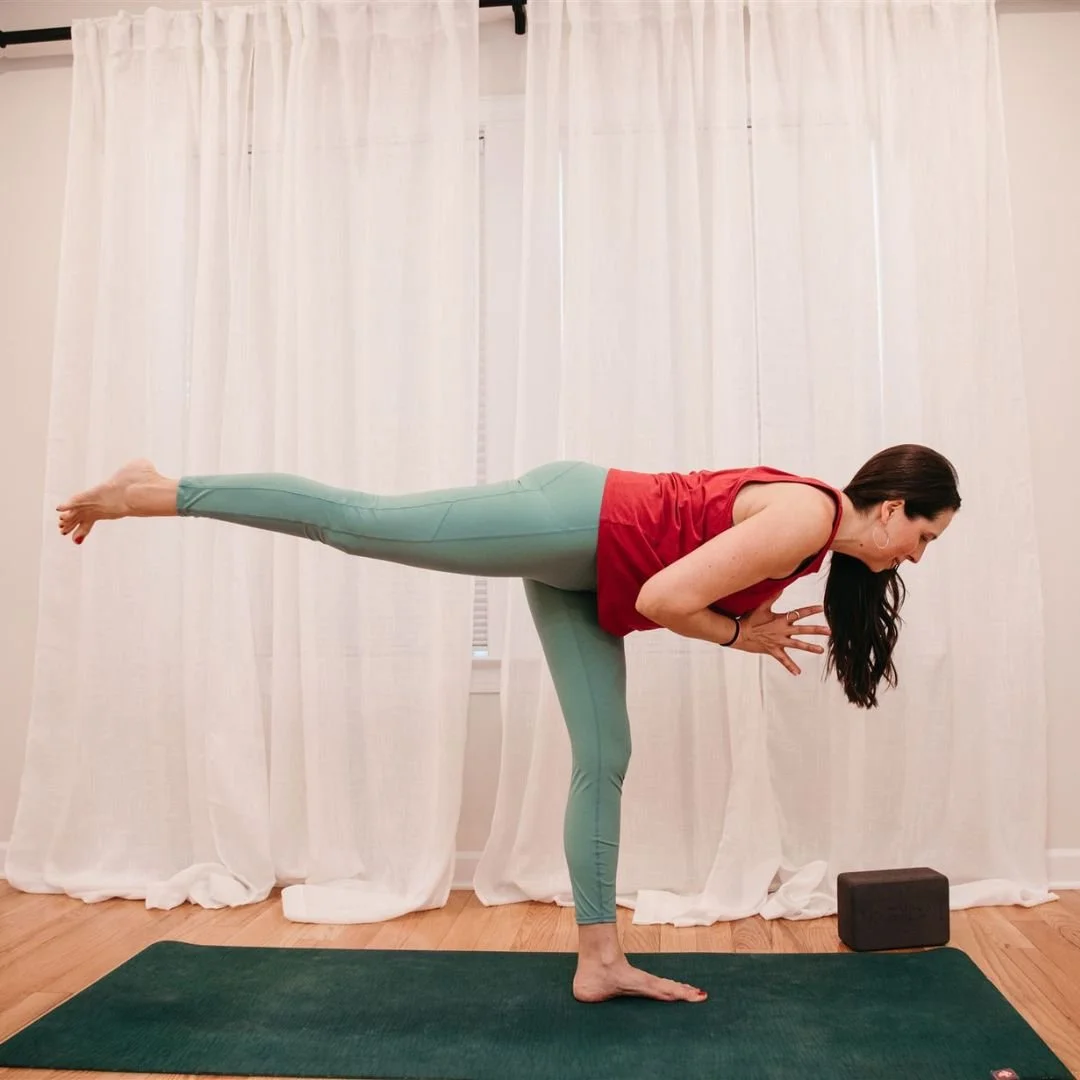
So if you hold warrior 2 with your front knee at 90°, you might strengthen that particular angle (and ~10-15° in either direction) – but you wouldn’t necessarily be building strength across the full range of motion your knee and hip move through.
In contrast, dynamic (isotonic) strength training tends to yield broader adaptations – more strength across a wider range of joint angles, and better carryover to tasks that involve actual movement.
That’s why in athletic contexts, dynamic training is generally more useful – though isometrics can still play a supportive role (especially in rehab, phases where dynamic work is contraindicated, or for building strength, muscle, and even tendon stiffness in very joint-specific ways) (Oranchuk et al., 2019).
But this brings us to an important point:
Why Yoga Usually Isn’t Enough for Long-Term Strength Gains
Yoga can build some strength – especially for beginners – but it’s usually not structured like a progressive strength training program.
Even though long holds and flowing movements in yoga can feel hard, they typically aren’t intense enough – and they’re not structured around progressive overload (with reps, sets, rest, and gradually increasing demands over time) – to build meaningful long-term strength. That applies to both long isometric holds and dynamic yoga sequences.
Now it is the case that for those who are new to a yoga practice, yoga might provide enough stimulus at first to improve strength. Absolutely! But our bodies adapt. And without progression, those strength gains plateau.
So when it comes to the question of whether dynamic movements in yoga build more strength than long-held isometric ones, I’d suggest that this question itself could use some reframing.
That’s because neither of these movement types – when done in the way yoga typically approaches them – is especially effective for building strength in the long term. They might offer some strength benefits early on, especially for those who are new to the practice, but yoga isn’t structured for progressive overload or high-intensity effort. Without those ingredients, we adapt quickly and plateau.
This is why I’m a big advocate for yogis adding a separate, intentional strength training practice to their movement repertoire if building long-term, whole body strength is a goal. (Hello, my Strength for Yoga Remote Group Training program! 💪🧘♀️)
Then we can let yoga be the beautiful, grounding, mindful movement practice that it is – without putting pressure on it to deliver something it’s not really designed to offer.
The Benefits of Long Holds in Yoga Beyond Strength
All that said, long holds in yoga poses do have a lot of value beyond just strength:
✔️ Muscular endurance
✔️ Neuromuscular control
✔️ Increased range of motion
✔️ Increased body awareness
✔️ Analgesic (pain-reducing) effects
✔️ Clarified body maps in the brain
✔️ Stillness, focus, and nervous system regulation
✔️ …and more!
So Are Long Holds in Yoga “Functional”?
I’d say yes – if we define “functional” as anything that helps us move and feel better in life. Long holds can support body awareness, joint control, and endurance, and they might even build some strength for those who are new to the practice.
But once we’ve adapted to yoga’s demands, long holds (and yoga flows in general) typically aren’t intense or progressive enough to keep building strength or muscle in an ongoing way. They’re just not structured for that kind of training stimulus – and that’s okay! That’s not what yoga is designed for.
Yoga isn’t meant to be a strength or performance training system – and that’s part of its amazing value. It gives us space to move with curiosity, build awareness, and relate to our bodies in ways that don’t revolve around measurable outcomes. That’s why yoga is my personal favorite movement modality of them all (although I’m definitely a little biased 😛)!
Practical Takeaways
Long yoga holds can build some strength and endurance
Dynamic movement generally builds strength across a wider range of motion
Yoga is usually not structured progressively enough for ongoing strength gains
Both long holds and flowing movement can still offer many benefits
Dedicated strength training can complement a yoga practice well
Reference:
Oranchuk, Dustin J., et al. "Isometric training and long‐term adaptations: Effects of muscle length, intensity, and intent: A systematic review." Scandinavian journal of medicine & science in sports 29.4 (2019): 484-503.
You Might Also Like…